
Amphibious excavator pontoons are one of the most important components of modern amphibious construction equipment. They allow excavators to operate safely and efficiently in wetlands, swamps, rivers, marshes, lakes, and shallow water environments where conventional crawler excavators cannot work effectively.
Designed to provide flotation, stability, and low ground pressure, amphibious pontoons are widely used in river dredging, flood control, wetland engineering, and environmental restoration projects.
HEKING amphibious excavator pontoons are engineered with reinforced steel structures and professional amphibious technology to ensure reliable performance in harsh working environments.
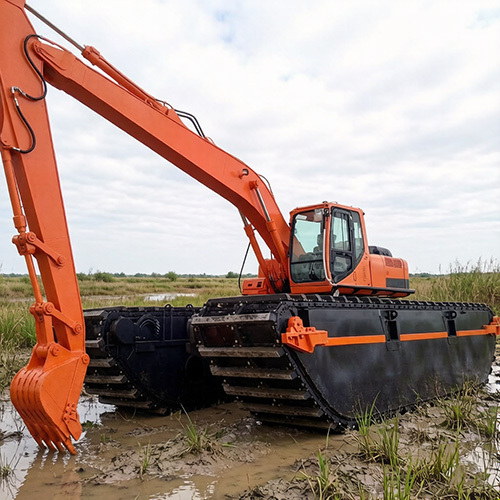
What Are Amphibious Excavator Pontoons?
Amphibious excavator pontoons are floating undercarriage structures installed beneath an excavator to improve flotation and mobility in soft terrain and waterlogged environments.
Unlike standard crawler undercarriages, amphibious pontoons are designed to:
- Reduce ground pressure
- Increase buoyancy
- Improve operational stability
- Prevent machine sinking
- Enable movement in shallow water
These pontoons transform conventional excavators into professional amphibious excavation machines suitable for difficult terrain applications.
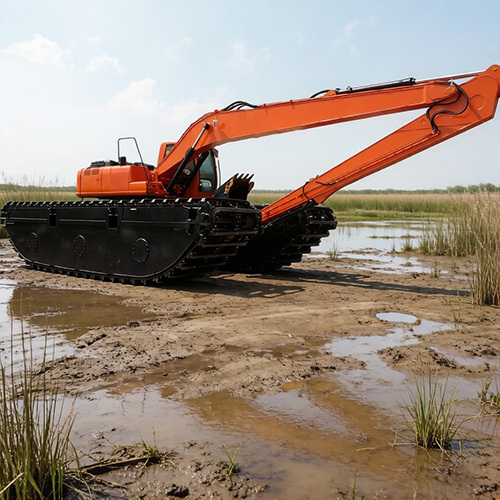
Main Functions of Amphibious Excavator Pontoons
Providing Flotation Capability
The primary function of amphibious pontoons is to provide sufficient buoyancy for machine operation in wetlands and shallow water.
Large enclosed pontoon chambers allow the excavator to float and maintain stability during dredging and excavation work.
This flotation capability is essential for:
- River dredging
- Lake desilting
- Marsh excavation
- Flood control projects
- Water conservancy engineering
Reducing Ground Pressure
Amphibious pontoons distribute machine weight over a larger surface area, significantly reducing ground pressure.
Low ground pressure helps:
- Prevent sinking
- Protect soft wetland environments
- Improve machine mobility
- Reduce environmental impact
This is especially important for environmental restoration and ecological engineering projects.
Improving Stability During Operation
The wide pontoon structure improves operational balance during excavation work.
Enhanced stability allows operators to:
- Work safely in muddy terrain
- Perform precise dredging operations
- Maintain machine control in shallow water
- Improve digging efficiency
Additional side pontoons and spuds can further increase stability during heavy-duty dredging applications.
Key Structural Features of HEKING Amphibious Pontoons
HEKING amphibious excavator pontoons are designed using high-strength materials and reinforced engineering structures for long-term durability.
Reinforced Steel Structure
HEKING pontoons are manufactured using high-strength steel materials such as Q345B steel.
Advantages include:
- Improved structural strength
- Better impact resistance
- Longer service life
- Enhanced durability in harsh environments
This reinforced structure is ideal for continuous dredging and wetland excavation projects.
Large Buoyancy Design
The large internal pontoon volume improves flotation performance and machine stability.
Benefits include:
- Better floating capability
- Improved safety
- Increased operational efficiency
- Reliable movement in wetlands
Large buoyancy pontoons are particularly important for heavy amphibious excavators operating in deep mud and soft terrain.
Reinforced Track Chains and Shoes
HEKING pontoons use strengthened track chains and track shoes for improved durability and traction.
Features include:
- Heavy-duty chain systems
- Wear-resistant track shoes
- Better traction in muddy terrain
- Improved movement stability
This design helps increase equipment reliability during long-term operation.
Hydraulic Extendable Undercarriage
Some HEKING amphibious excavators include hydraulic extendable pontoon systems.
Advantages include:
- Adjustable working width
- Improved transport convenience
- Better operational stability
- Flexible site adaptation
Hydraulic extendable undercarriages are commonly used on machines such as the HK150SD amphibious excavator.
Four Travel Motor Configuration
Many HEKING amphibious excavators use four travel motors integrated into the pontoon system.
This configuration provides:
- Strong traction force
- Better maneuverability
- Stable movement in wetlands
- Improved climbing capability
Four-motor designs are ideal for difficult swamp and marshland environments.
Applications of Amphibious Excavator Pontoons
Amphibious pontoons are widely used in multiple industries and construction environments.
River Dredging Projects
Pontoons improve machine stability and flotation during sediment removal operations.
Wetland Construction
Low ground pressure reduces environmental disturbance during ecological engineering projects.
Flood Control Operations
Amphibious excavators can operate safely in unstable flood control environments.
Lake Cleaning and Desilting
Pontoons allow excavation equipment to work efficiently in shallow water conditions.
Pipeline Installation in Swamps
The flotation capability helps maintain machine stability during pipeline construction in marshland areas.
Advantages of HEKING Amphibious Pontoon Technology
HEKING amphibious pontoons provide several important operational advantages.
Main benefits include:
- Excellent flotation capability
- Low ground pressure
- Reinforced heavy-duty structure
- Strong mobility in wetlands
- Improved dredging efficiency
- Stable shallow water operation
- Long service life
- Easy maintenance
These advantages make HEKING pontoons suitable for professional amphibious engineering applications worldwide.
Compatible HEKING Amphibious Pontoon Models
HEKING offers multiple amphibious pontoon models for different excavator sizes and project requirements.
Popular models include:
- HEKING AUP80 Amphibious Undercarriage Pontoon
- HEKING AUP140 Amphibious Undercarriage Pontoon
- HEKING AUP220 Amphibious Pontoon Undercarriage
- HEKING AUP250 Amphibious Undercarriage Pontoon
- HEKING AUP270 Amphibious Undercarriage Pontoon
- HEKING AUP330 Amphibious Undercarriage Pontoon
These pontoon systems are suitable for different dredging and wetland engineering applications.
Why Global Customers Choose HEKING Amphibious Pontoons
HEKING is recognized as a professional amphibious excavator manufacturer from China with extensive experience in amphibious undercarriage engineering.
Customers choose HEKING because of:
- Professional manufacturing technology
- Reliable engineering quality
- Customized pontoon solutions
- Competitive factory pricing
- Global export experience
- Professional after-sales support
HEKING products are widely used in environmental engineering, dredging, and wetland construction projects around the world.
Product FAQ
What are amphibious excavator pontoons used for?
Amphibious pontoons are used to provide flotation, stability, and low ground pressure for excavators operating in wetlands, swamps, rivers, lakes, and shallow water environments.
Why are pontoons important for amphibious excavators?
Pontoons prevent machine sinking and improve operational safety and mobility in soft ground conditions.
What materials are HEKING pontoons made from?
HEKING pontoons are manufactured using high-strength steel materials such as Q345B steel.
What are the advantages of hydraulic extendable pontoons?
Hydraulic extendable pontoons improve machine stability and allow easier transportation by adjusting the undercarriage width.
Can HEKING pontoons be customized?
Yes. HEKING provides customized pontoon configurations according to customer project requirements.
Are additional pontoons and spuds available?
Yes. Additional flotation pontoons and spud systems are available for improved stability during dredging operations.
Which HEKING excavators use amphibious pontoons?
Models including HK150SD, HK200SD, HK300SD, HK300SDA, and HK400SD use professional amphibious pontoon systems.
Does HEKING provide global technical support?
Yes. HEKING provides international shipping, technical consultation, spare parts supply, and professional after-sales support.