An amphibious excavator is a specialized construction machine designed to operate efficiently in wetlands, swamps, marshes, shallow water, muddy terrain, and other unstable ground conditions where conventional excavators cannot work safely.
Unlike standard excavators, amphibious excavators are equipped with specially designed pontoon undercarriages that provide flotation, low ground pressure, and stable movement across soft and waterlogged terrain.
These machines are widely used in:
- River dredging
- Lake desilting
- Wetland construction
- Flood control projects
- Environmental restoration
- Swamp excavation
- Water conservancy engineering
HEKING amphibious excavators are engineered to provide excellent flotation performance, strong digging capability, and reliable operation in the most challenging environments.
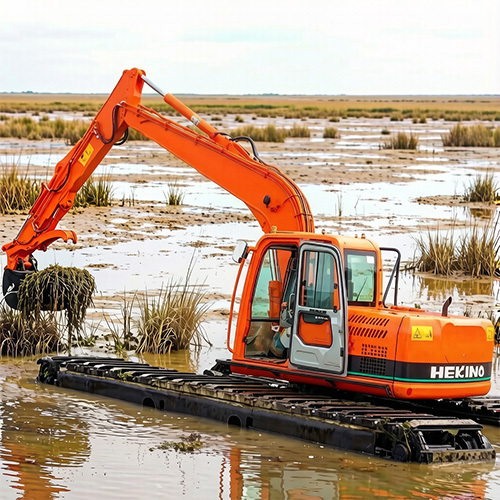
What Makes an Amphibious Excavator Different?
The main difference between a conventional excavator and an amphibious excavator is the undercarriage structure.
Traditional excavators use standard steel crawler tracks designed for hard ground conditions. However, these machines can easily sink or become unstable in wetlands and swamp environments.
HEKING amphibious excavators use large buoyancy pontoons that allow the machine to float and travel safely in soft ground and shallow water conditions.
Main Structural Differences
Standard Excavator
- High ground pressure
- Limited operation in muddy areas
- No flotation capability
- Suitable mainly for dry land
Amphibious Excavator
- Low ground pressure
- Large buoyancy pontoons
- Stable operation in wetlands
- Excellent flotation capability
- Suitable for shallow water and swamp environments
This unique design makes amphibious excavators essential equipment for dredging and environmental engineering projects.
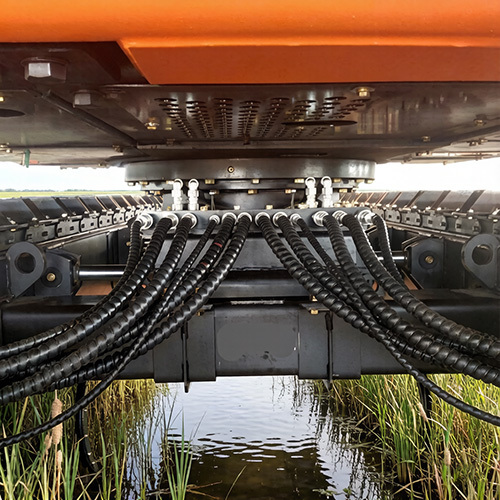
Main Components of an Amphibious Excavator
HEKING amphibious excavators combine advanced hydraulic systems with specialized flotation technology.
Pontoon Undercarriage
The pontoon undercarriage is the most important component of an amphibious excavator.
Its functions include:
- Providing flotation capability
- Reducing ground pressure
- Improving operational stability
- Allowing movement in swamp terrain
HEKING pontoons are manufactured using high-strength Q345B steel to ensure durability and corrosion resistance.
Hydraulic System
HEKING amphibious excavators use premium hydraulic components from internationally recognized brands such as:
- Kawasaki
- Toshiba
- Doosan
- PARKER
The hydraulic system controls:
- Boom movement
- Arm operation
- Bucket digging force
- Swing movement
- Travel motors
This system provides smooth control response and powerful excavation performance.
Engine System
The engine provides the power required for excavation and machine movement.
HEKING machines use reliable diesel engines including:
- Yanmar
- Mitsubishi
- Cummins
- Isuzu
These engines are known for:
- Strong power output
- Fuel efficiency
- Stable performance
- Long service life
Travel Motors
Many HEKING amphibious excavators are equipped with multiple travel motors to improve mobility in difficult terrain.
Advantages include:
- Strong traction
- Better maneuverability
- Improved stability
- Reliable movement in muddy conditions
Some models feature four travel motors for enhanced performance.
How Does an Amphibious Excavator Work?
An amphibious excavator works by combining flotation capability with hydraulic excavation power.
The pontoon undercarriage distributes the machine's weight over a larger surface area, greatly reducing ground pressure and preventing the excavator from sinking into soft terrain.
At the same time, the hydraulic system powers the boom, arm, and bucket to perform excavation and dredging operations.
Working Process
Step 1: Floating and Traveling
The pontoons allow the excavator to move across wetlands, marshes, and shallow water safely.
Step 2: Stabilization
The wide undercarriage and reinforced pontoons improve machine stability during operation.
Step 3: Excavation and Dredging
The hydraulic system powers the bucket and boom to remove sediment, soil, vegetation, or debris.
Step 4: Material Handling
Excavated material can be transferred to barges, trucks, or nearby disposal areas.
This process allows amphibious excavators to complete projects efficiently in environments where standard excavators cannot operate.
Applications of Amphibious Excavators
HEKING amphibious excavators are widely used in multiple industries.
River Dredging
Removing sediment buildup to improve water flow and reduce flooding risks.
Wetland Restoration
Supporting ecological rehabilitation and environmental protection projects.
Lake Desilting
Cleaning lake bottoms and removing accumulated sediment.
Flood Control Projects
Excavating drainage channels and maintaining flood prevention systems.
Swamp and Marsh Excavation
Operating efficiently in unstable and muddy environments.
Water Conservancy Engineering
Supporting irrigation systems, reservoirs, and water infrastructure projects.
Advantages of HEKING Amphibious Excavators
HEKING amphibious excavators provide several professional advantages.
Excellent Flotation Capability
Large buoyancy pontoons provide stable floating performance in shallow water environments.
Low Ground Pressure
The pontoon structure minimizes damage to wetlands and soft terrain.
Powerful Hydraulic Performance
Premium hydraulic systems ensure strong digging force and smooth operation.
Durable Heavy-Duty Structure
Reinforced track chains, pontoons, and undercarriage components improve service life in harsh working conditions.
Multiple Product Models
HEKING offers various models for different project requirements:
- HK150SD Amphibious Excavator
- HK200SD Amphibious Excavator
- HK300SD Amphibious Excavator
- HK300SDA Long Reach Amphibious Excavator
- HK400SD Heavy-Duty Amphibious Excavator
Why Amphibious Excavators Are Important for Modern Engineering
Modern environmental and water conservancy projects increasingly require specialized equipment capable of working safely in difficult terrain.
Amphibious excavators provide:
- Higher operational efficiency
- Reduced environmental impact
- Improved safety
- Better accessibility in wetlands
- Lower project downtime
This makes them essential equipment for modern dredging and environmental engineering industries.
FAQ
What is an amphibious excavator mainly used for?
Amphibious excavators are mainly used for river dredging, lake cleaning, wetland restoration, swamp excavation, flood control, and environmental engineering projects.
Can amphibious excavators float on water?
Yes. The pontoon undercarriage provides flotation capability for operation in shallow water and swamp conditions.
What are the advantages of amphibious excavators over conventional excavators?
Amphibious excavators offer:
- Lower ground pressure
- Better flotation
- Improved stability in wetlands
- Safe operation in muddy environments
What engines are used in HEKING amphibious excavators?
HEKING machines use reliable engines from brands such as Yanmar, Mitsubishi, Cummins, and Isuzu.
Can HEKING amphibious excavators be customized?
Yes. HEKING provides customized solutions including:
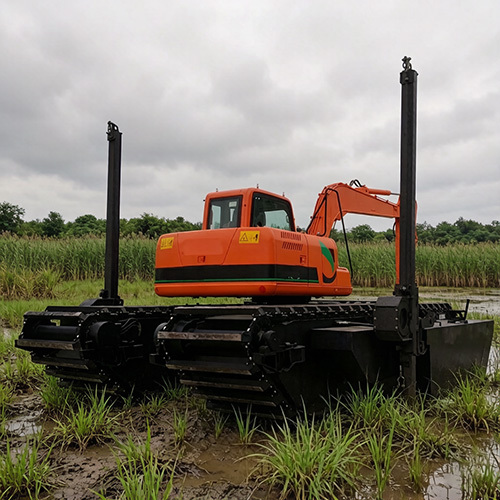
- Long reach booms
- Additional pontoons
- Spud systems
- Specialized dredging buckets
- Customized undercarriage designs
Does HEKING provide global after-sales service?
Yes. HEKING provides global technical support, spare parts supply, and professional after-sales service.