
Dredging projects often involve some of the most challenging working environments in the construction and infrastructure industries. Rivers, wetlands, marshes, swamps, shallow water zones, and coastal areas frequently contain unstable ground conditions where conventional excavators cannot operate safely or efficiently. This is where the amphibious excavator becomes an essential solution.
An amphibious excavator is specifically engineered for soft terrain and waterlogged environments. Equipped with sealed pontoons, wide track systems, and low ground pressure technology, these machines can travel and work effectively in areas where standard crawler excavators would sink or become immobilized.
Today, amphibious excavators are widely used in river dredging, flood prevention projects, wetland restoration, environmental protection work, oil and gas pipeline construction, and coastal engineering operations throughout Europe, the Middle East, and other global markets.
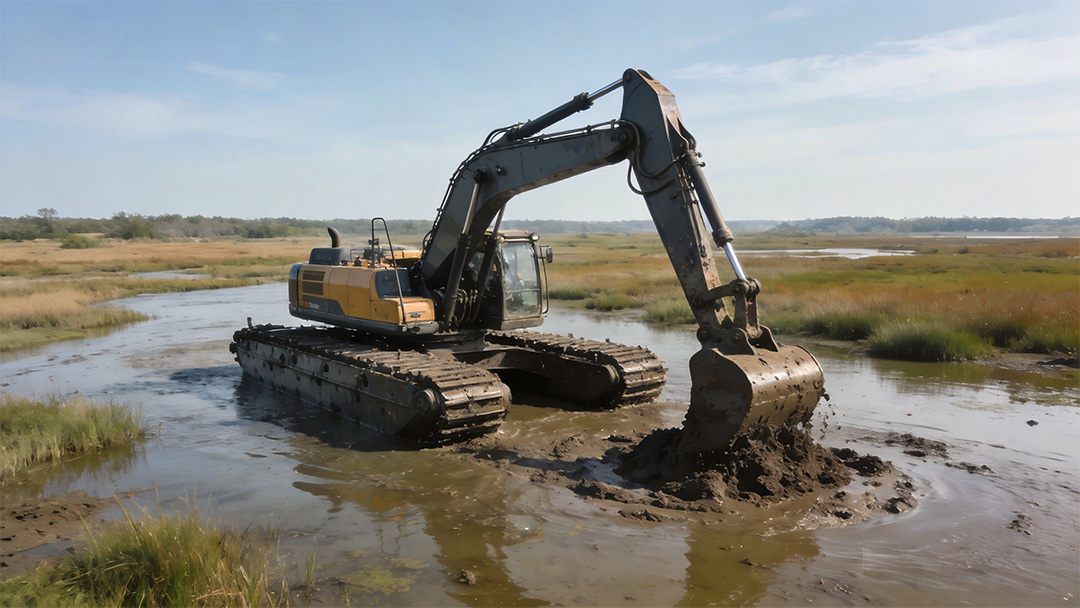
Why Amphibious Excavators Are Important in Dredging Operations
Traditional excavators are limited when working in muddy or saturated terrain. Excessive ground pressure can damage wetlands, reduce productivity, and increase operational risks. Amphibious excavators solve these issues by distributing machine weight across large pontoon structures.
Their floating capability allows operators to move directly into shallow water, marshes, and unstable dredging zones without relying heavily on temporary access roads or support barges. This significantly reduces project costs and improves construction efficiency.
For contractors involved in river maintenance, canal dredging, reservoir cleaning, and flood management, amphibious excavators provide a practical and reliable long-term solution.
Key Advantages of Amphibious Excavators in Dredging Projects
Excellent Mobility on Soft Ground
One of the biggest advantages of an amphibious excavator is its ability to travel across wetlands, swamps, mudflats, and soft soil without sinking. The specially designed pontoon undercarriage provides excellent flotation and stability.
This allows operators to access remote dredging areas that are difficult or impossible for conventional excavators to reach.
Reduced Ground Pressure
Amphibious excavators are designed with extremely low ground pressure. This minimizes environmental impact and prevents excessive damage to sensitive ecosystems such as marshlands and wetlands.
Low ground pressure is especially important in environmental dredging and ecological restoration projects.
High Efficiency in River Dredging
River dredging projects require continuous excavation and sediment removal in unstable terrain. Amphibious excavators can operate directly in shallow water without requiring additional floating platforms.
This improves operational efficiency and reduces equipment transportation costs.
Improved Safety in Wet Conditions
Operating heavy machinery in waterlogged terrain can be dangerous when using standard equipment. Amphibious excavators offer improved stability through reinforced pontoons and wide track systems.
The machine design reduces the risk of sinking, tipping, or becoming trapped in mud.
Versatile Applications
Modern amphibious excavators can perform a wide range of tasks, including:
- River dredging
- Canal cleaning
- Swamp excavation
- Wetland construction
- Flood control
- Coastal engineering
- Pipeline installation
- Environmental restoration
- Sediment removal
This versatility makes them valuable assets for contractors and government infrastructure projects.
Lower Project Costs
Because amphibious excavators can work directly in difficult terrain, contractors can reduce spending on temporary roads, floating platforms, cranes, and support equipment.
The ability to mobilize quickly also helps shorten project timelines and reduce labor costs.
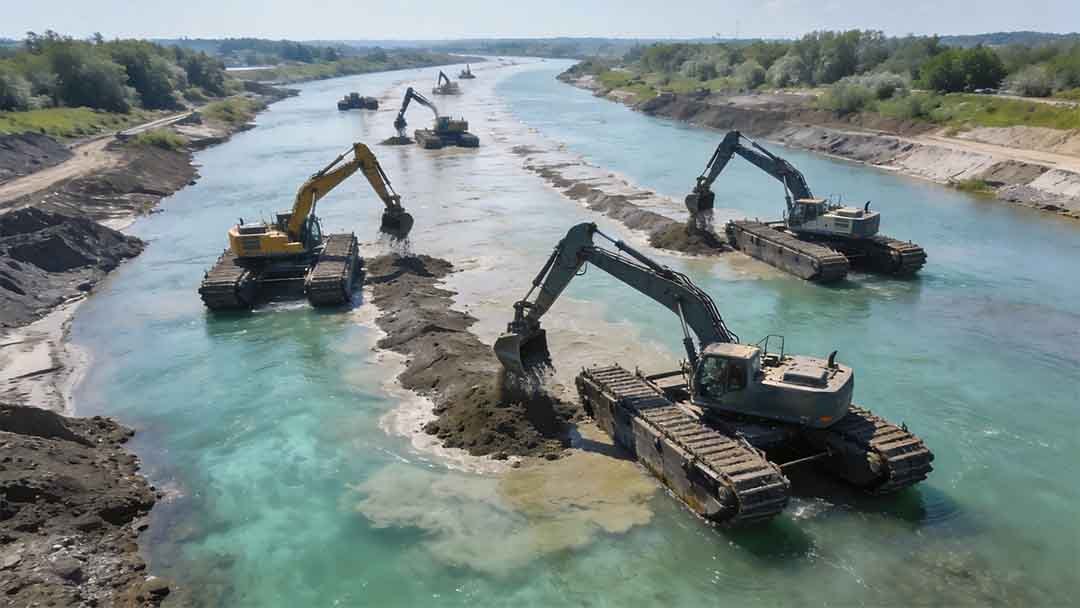
Typical Industries Using Amphibious Excavators
Many industries benefit from amphibious excavator technology, including:
- Government dredging authorities
- Environmental engineering companies
- Marine construction contractors
- Oil and gas pipeline contractors
- Flood control agencies
- Port maintenance companies
- Mining operations
- Wetland restoration organizations
In Europe and the Middle East, increasing demand for flood prevention and environmental infrastructure continues to drive the need for reliable amphibious machinery.
Important Features to Consider When Choosing an Amphibious Excavator
When selecting an amphibious excavator for dredging operations, buyers should evaluate several important factors:
Pontoon Design
High-buoyancy pontoons improve stability and working performance in deep mud and shallow water environments.
Hydraulic System Reliability
Strong hydraulic systems ensure stable digging force and efficient operation during continuous dredging work.
Engine Performance
Reliable engines provide sufficient power for long working hours in demanding jobsite conditions.
Track System Strength
Reinforced track chains and track shoes improve durability in abrasive muddy environments.
Optional Attachments
Additional pontoons, spuds, dredging pumps, and long-reach booms can improve operational flexibility.
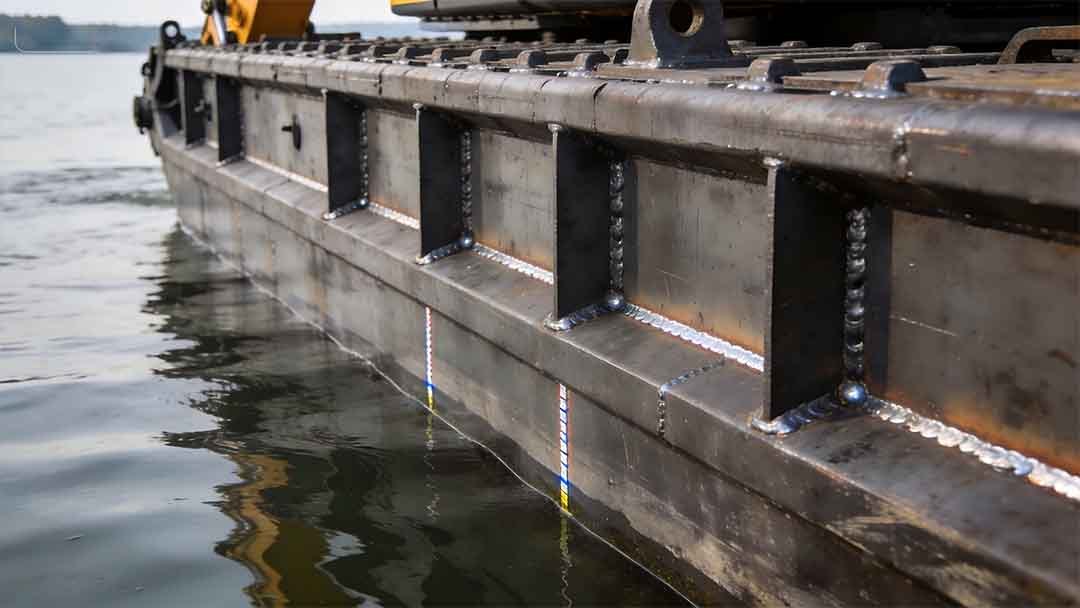
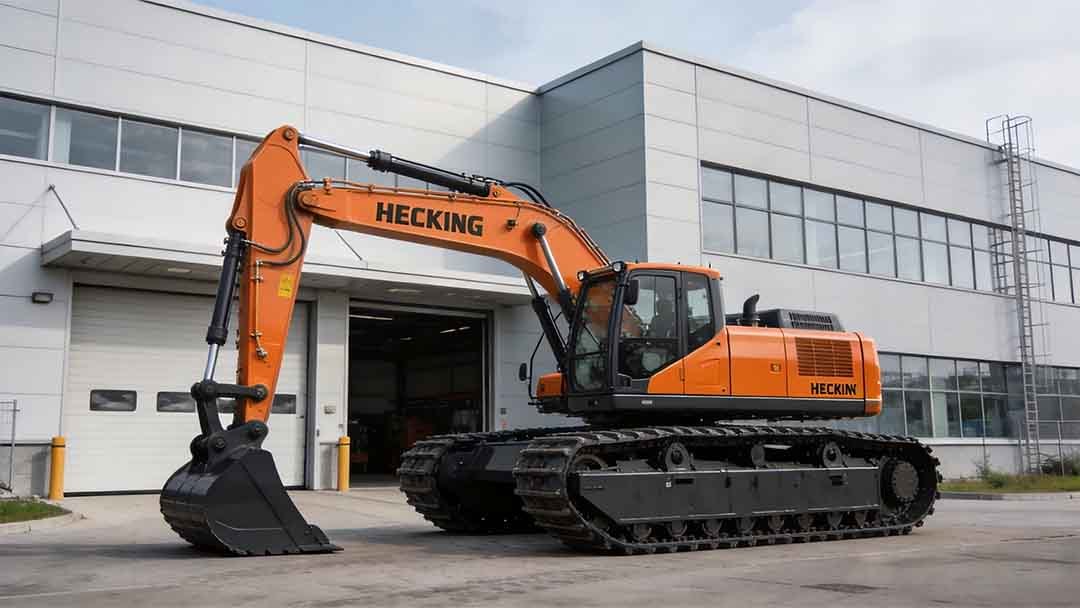
HEKING Amphibious Excavator Solutions
HEKING manufactures a wide range of amphibious excavators designed for global dredging and wetland projects. The company provides solutions for various working capacities, including compact swamp excavators and heavy-duty dredging machines.
HEKING amphibious excavators are engineered with reinforced pontoon systems, reliable hydraulic components, and durable structures suitable for demanding international projects.
Applications include:
- River dredging
- Flood control projects
- Wetland maintenance
- Coastal construction
- Oil and gas infrastructure
- Marshland excavation
Amphibious excavators have become essential equipment in modern dredging operations. Their ability to operate safely and efficiently in wetlands, rivers, marshes, and shallow water environments provides significant advantages over traditional excavators.
With lower ground pressure, better mobility, improved safety, and reduced project costs, amphibious excavators are widely recognized as one of the most effective solutions for challenging dredging applications.
As infrastructure development and environmental protection projects continue to expand worldwide, demand for high-performance amphibious excavators will continue to grow across Europe, the Middle East, and other international markets.
FAQ
Q1: What is an amphibious excavator used for?
A: An amphibious excavator is mainly used for dredging, swamp excavation, wetland construction, flood control, and shallow water engineering projects.
Q2: Why are amphibious excavators suitable for dredging operations?
A: They can operate safely in soft ground, muddy terrain, and shallow water where conventional excavators cannot work efficiently.
Q3: Can amphibious excavators float on water?
A: Yes. The pontoon undercarriage provides buoyancy, allowing the machine to travel and work in shallow water conditions.
Q4: What industries commonly use amphibious excavators?
A: Industries include river dredging, marine engineering, oil and gas, environmental restoration, mining, and flood prevention projects.
Q5: What are the advantages of low ground pressure?
A: Low ground pressure prevents sinking, improves machine stability, and minimizes environmental damage in wetlands and marshes.
Q6: Are amphibious excavators suitable for coastal engineering?
A: Yes. They are widely used in coastal construction, shoreline reinforcement, and tidal area maintenance projects.
Q7: What attachments can be used with amphibious excavators?
A: Common attachments include dredging buckets, shell buckets, long-reach arms, cutter suction pumps, and spuds.
Q8: How do amphibious excavators improve project efficiency?
A: They reduce the need for temporary roads, floating platforms, and support equipment while improving access to difficult terrain.