
The Growing Importance of Wetland Restoration
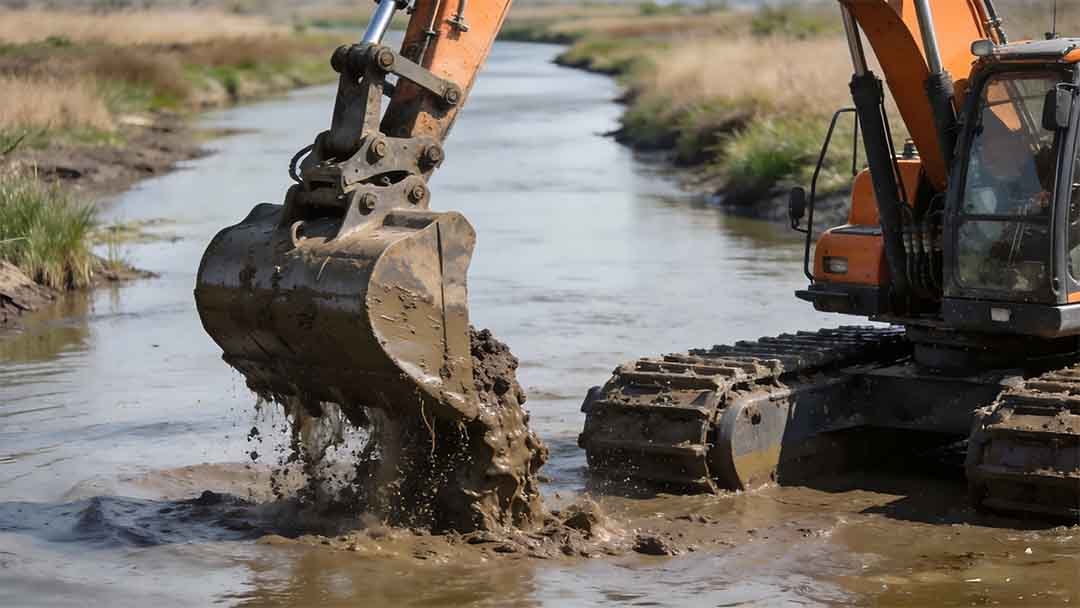
Wetlands play a critical role in environmental protection, biodiversity conservation, flood prevention, and water purification. Around the world, governments and infrastructure companies are investing heavily in wetland restoration projects to recover damaged ecosystems and improve climate resilience.
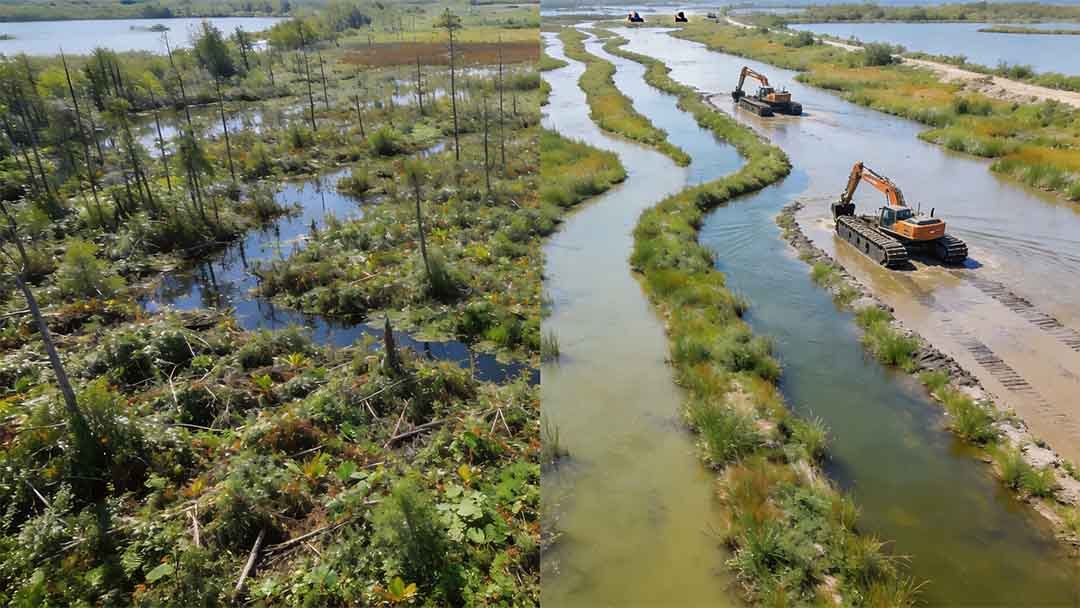
However, wetland environments present major operational challenges. Soft soil, unstable ground, marshland, shallow water, and muddy terrain make it difficult for conventional construction equipment to operate safely and efficiently. This is where amphibious excavators have become essential equipment for modern ecological restoration projects.
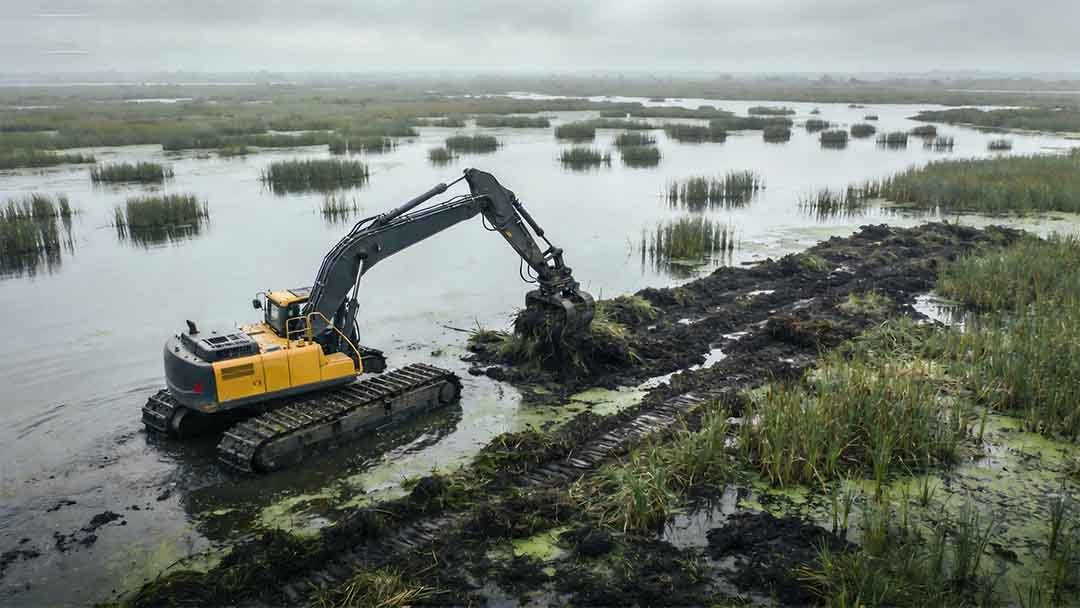
Amphibious excavators are specially designed to work in swamps, wetlands, rivers, ponds, and flooded construction zones. Their pontoon undercarriage systems allow them to float and travel across soft terrain while maintaining stable excavation performance.
Why Amphibious Excavators Are Ideal for Wetland Restoration
Low Ground Pressure Performance
One of the biggest advantages of amphibious excavators is their extremely low ground pressure. Traditional crawler excavators often sink into muddy ground, causing environmental damage and operational delays.
Amphibious excavators distribute machine weight evenly through wide pontoons and reinforced track systems. This allows operators to work safely in environmentally sensitive areas without excessive surface disruption.
This capability is especially important for:
- Marsh restoration
- Protected wetland zones
- Riverbank rehabilitation
- Coastal ecological projects
- Mangrove restoration
Efficient Dredging and Sediment Removal
Wetland restoration often requires the removal of sediment, sludge, debris, and vegetation from rivers, lakes, and drainage channels. Amphibious excavators provide efficient dredging performance in shallow water and soft mud conditions.
With long-reach boom configurations and powerful hydraulic systems, these machines can:
- Deepen waterways
- Improve water flow
- Remove contaminated sediment
- Restore natural drainage systems
- Support flood prevention projects
Compared with standard excavators, amphibious models reduce access limitations and improve project efficiency in difficult environments.
Environmental Protection Benefits
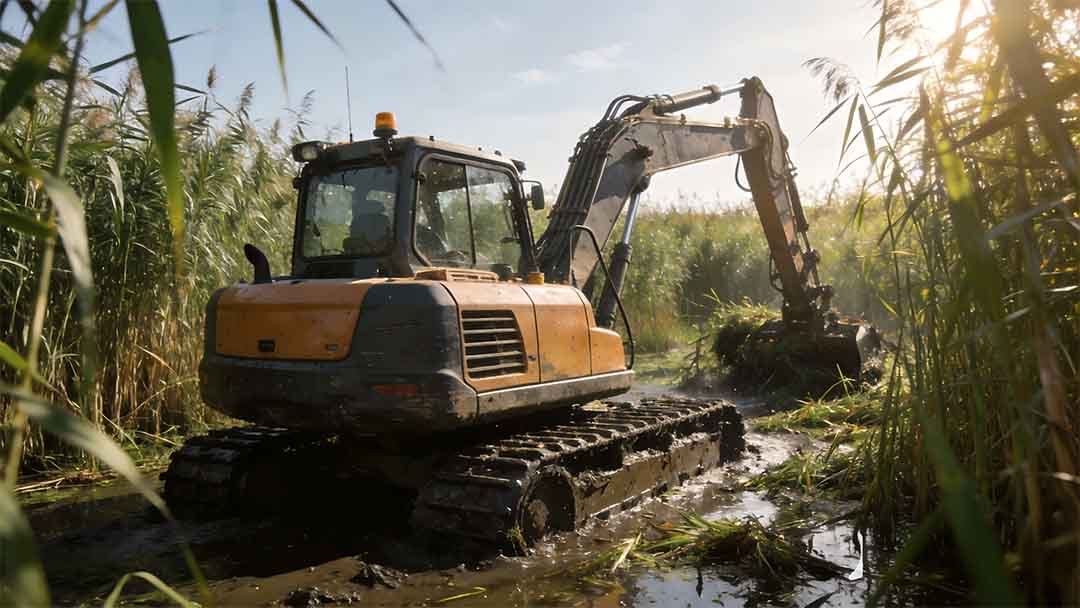
Modern restoration projects focus heavily on minimizing environmental impact during construction. Amphibious excavators help reduce ecosystem disruption by:
- Preventing excessive ground compaction
- Reducing damage to surrounding vegetation
- Improving mobility in protected environments
- Minimizing temporary road construction requirements
This makes amphibious excavation equipment highly suitable for environmentally regulated projects in Europe, the Middle East, Southeast Asia, and coastal regions worldwide.
Common Wetland Restoration Applications
Amphibious excavators are widely used in multiple environmental and infrastructure applications.
Typical Project Applications Include:
- Wetland rehabilitation
- River dredging
- Lake cleaning
- Flood control construction
- Marshland excavation
- Coastal protection engineering
- Canal maintenance
- Environmental remediation
- Mangrove restoration
- Sediment removal projects
Large restoration projects often require reliable equipment capable of operating continuously in waterlogged environments. Amphibious excavators provide the flexibility and durability needed for these demanding operations.
Key Features of Amphibious Excavators for Restoration Projects
Reinforced Pontoon Undercarriage
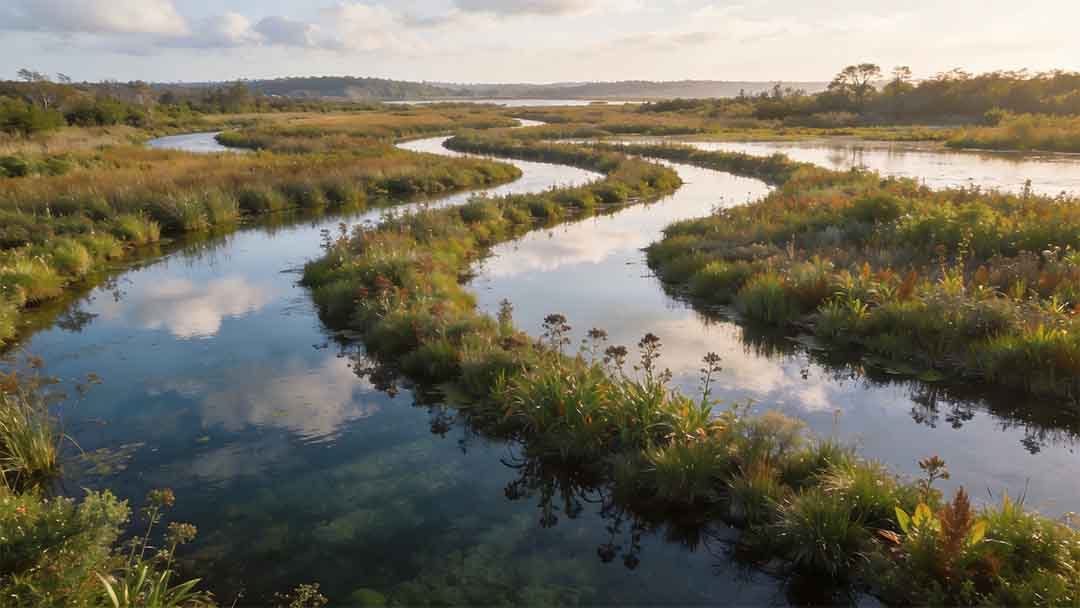
The pontoon system is the core feature of amphibious excavators. Reinforced pontoons provide flotation, stability, and improved traction in muddy terrain.
High-quality amphibious undercarriages are engineered with:
- Heavy-duty steel construction
- Corrosion-resistant materials
- Multi-chain track systems
- Sealed floating compartments
- Enhanced durability for water operations
Long Reach Excavation Capability
Many wetland projects require excavation over wide working ranges. Long-reach amphibious excavators allow operators to work from stable positions while extending digging reach into waterways and marsh areas.
This improves safety and operational efficiency during dredging and environmental construction projects.
Adaptability for Different Water Conditions
Advanced amphibious excavators can be customized with:
- Additional pontoons
- Spud systems
- Dredging pumps
- Specialized buckets
- Environmental attachments
This flexibility allows contractors to adapt equipment configurations according to project depth and terrain conditions.
Choosing the Right Amphibious Excavator Supplier
Selecting a reliable amphibious excavator manufacturer is critical for long-term project success. Buyers should evaluate:
- Manufacturing experience
- Production capabilities
- International certifications
- Hydraulic system quality
- Pontoon engineering
- After-sales support
- Spare parts supply
- Export experience
Professional manufacturers provide customized solutions for specific project environments and regional operating conditions.
Companies involved in large-scale environmental engineering projects often require dependable equipment with strong durability and stable hydraulic performance for continuous operation.
The Future of Wetland Restoration Equipment
As environmental regulations continue to expand globally, the demand for amphibious excavation equipment is expected to grow rapidly. Wetland restoration projects are becoming increasingly important for sustainable infrastructure development, flood control, and ecological conservation.
Modern amphibious excavators now combine:
- Advanced hydraulic technology
- Improved fuel efficiency
- Reinforced flotation systems
- Enhanced operator comfort
- Better environmental performance
These innovations allow contractors and environmental engineering companies to complete restoration projects more efficiently while protecting fragile ecosystems.
Amphibious excavators have become one of the most effective solutions for restoring wetlands and maintaining water infrastructure in difficult terrain conditions worldwide.
FAQ
Q1: What is an amphibious excavator used for in wetland restoration?
A: Amphibious excavators are used for dredging, sediment removal, marsh excavation, river restoration, flood control, and ecological rehabilitation projects.
Q2: Why are amphibious excavators better for wetlands than standard excavators?
A: Amphibious excavators have low ground pressure and floating pontoon systems that allow stable operation on muddy and waterlogged terrain.
Q3: Can amphibious excavators operate in deep water?
A: Yes. Many models can be equipped with additional pontoons and spud systems for deeper water applications.
Q4: What industries commonly use wetland excavators?
A: Environmental engineering, dredging companies, government infrastructure projects, mining operations, and coastal construction companies commonly use them.
Q5: Are amphibious excavators suitable for river dredging?
A: Yes. Amphibious excavators are widely used for river dredging, canal maintenance, and sediment removal projects.
Q6: What features are important when selecting a wetland excavator?
A: Important factors include pontoon quality, hydraulic system performance, engine reliability, digging reach, and international certifications.
Q7: Can amphibious excavators reduce environmental damage?
A: Yes. Their low ground pressure design minimizes soil disturbance and vegetation damage during restoration projects.
Q8: Are amphibious excavators exported to Europe and the Middle East?
A: Yes. Many manufacturers provide CE-certified amphibious excavators suitable for international construction and environmental projects.
Q9: What attachments can be used with amphibious excavators?
A: Common attachments include dredging buckets, cutter suction pumps, clamshell buckets, and long-reach arms.
Q10: How do amphibious excavators improve project efficiency?
A: They reduce access limitations, improve mobility in soft terrain, and allow continuous operation in difficult wetland environments.