
Choosing the right excavator is critical for construction contractors, dredging companies, wetland engineering firms, and infrastructure developers. While standard excavators are widely used for general earthmoving and construction work, amphibious excavators are specifically designed for soft ground, marshes, wetlands, and shallow water operations.
Understanding the differences between an amphibious excavator and a standard excavator helps project owners improve operational efficiency, reduce equipment downtime, and lower overall project risks. In many river dredging, flood control, and coastal engineering applications, the wrong equipment selection can lead to machine sinking, poor productivity, and costly delays.
This guide explains the major differences between amphibious excavators and standard excavators, including structure, working environment, mobility, applications, operating costs, and purchasing considerations for buyers in Europe and the Middle East.
What Is a Standard Excavator?
A standard excavator is a conventional crawler or wheeled machine used for excavation, demolition, trenching, mining, and material handling. These machines are typically designed for stable ground conditions such as:
- Urban construction sites
- Highway projects
- Quarry operations
- Dry land excavation
- Industrial earthmoving
Standard excavators use steel tracks or wheels to distribute weight on firm ground. They provide strong digging performance and are suitable for most traditional construction environments.
However, conventional excavators face serious limitations when working in:
- Muddy wetlands
- Swamps
- Peat soil
- Riverbanks
- Shallow water
- Flooded terrain
In these conditions, excessive ground pressure may cause the machine to sink or become immobilized.
What Is an Amphibious Excavator?
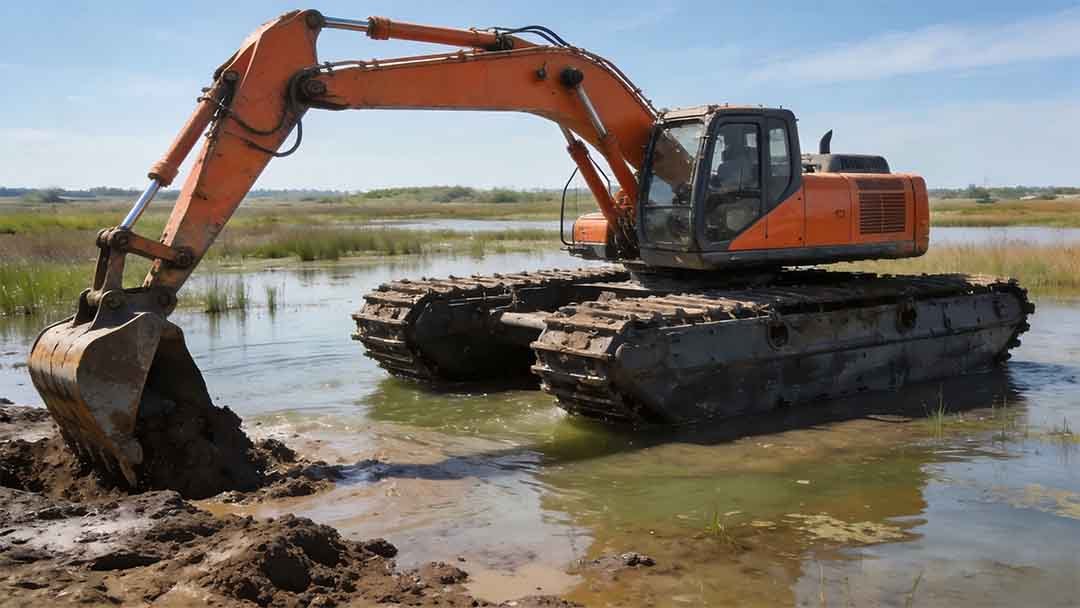
An amphibious excavator is a specially modified excavator equipped with floating pontoons or amphibious undercarriages that allow operation on soft terrain and shallow water surfaces.
Unlike conventional excavators, amphibious models are designed with:
- Wide pontoons for flotation
- Sealed buoyant structures
- Extended track width
- Lower ground pressure
- Enhanced stability in waterlogged terrain
These machines can travel across marshes, swamps, shallow lakes, wetlands, and coastal zones where traditional excavators cannot operate safely.
Amphibious excavators are commonly used for:
- River dredging
- Wetland restoration
- Flood control
- Coastal engineering
- Pipeline installation
- Environmental protection projects
- Mining pond maintenance
Main Differences Between Amphibious and Standard Excavators
1.Undercarriage StructureThe most important difference is the undercarriage design.
A standard excavator uses conventional steel crawler tracks. These tracks are optimized for solid ground but generate relatively high ground pressure.
An amphibious excavator uses pontoons or floating undercarriages. The wider footprint spreads machine weight across a larger surface area, significantly reducing sinking risk.
This flotation system allows amphibious excavators to operate in unstable environments where conventional excavators fail.
2.Working EnvironmentStandard excavators are suitable for:
- Dry construction sites
- Rocky terrain
- Urban infrastructure
- Mining operations
Amphibious excavators are designed for:
- Wetlands
- Swamps
- Rivers
- Marshes
- Soft mud
- Shallow water
For projects involving waterlogged ground conditions, amphibious excavators provide far better operational reliability.
3.Ground PressureGround pressure directly affects machine mobility in soft terrain.
Standard excavators have higher ground pressure due to narrow tracks and concentrated weight distribution.
Amphibious excavators feature ultra-low ground pressure because of their wide pontoons and floating structures. This enables safe movement on unstable surfaces without excessive sinking.
Lower ground pressure is essential for environmental protection projects where minimizing land damage is important.
4.Water Operation CapabilityConventional excavators cannot safely operate in deep mud or shallow water for extended periods.
Amphibious excavators are engineered for water-based operations. Many models can float and maneuver in shallow aquatic environments while maintaining stability during dredging work.
Optional side pontoons and spud systems further improve deep-water performance.
5.Project ApplicationsStandard excavators are mainly used for general construction and excavation.
Amphibious excavators are widely used in:
- River dredging projects
- Wetland construction
- Lake maintenance
- Flood prevention systems
- Oil and gas pipeline work
- Coastal reclamation
- Environmental restoration
Their specialized design makes them essential equipment for difficult terrain projects.
6.Transportation and MaintenanceStandard excavators are generally easier to transport due to compact dimensions.
Amphibious excavators may require additional transportation planning because of pontoon width and modular components. However, many modern pontoon systems are detachable for easier logistics.
Maintenance requirements also differ. Amphibious excavators require proper sealing inspections and pontoon maintenance to ensure long-term durability in water environments.
Advantages of Amphibious Excavators
Amphibious excavators offer several advantages over standard excavators in soft terrain applications:
- Improved mobility in wetlands and swamps
- Reduced machine sinking risk
- Better stability on muddy surfaces
- Lower environmental impact
- High efficiency for dredging operations
- Extended operational range in shallow water
- Increased project safety
- Reduced downtime in difficult terrain
- Adaptability for coastal engineering projects
For contractors handling wetland or dredging projects, amphibious excavators often deliver higher long-term operational value.
When Should You Choose an Amphibious Excavator?
An amphibious excavator is the preferred solution when projects involve:
- Waterlogged ground
- Marshland construction
- River maintenance
- Flood control systems
- Soft clay terrain
- Environmental restoration
- Shallow lake dredging
If a standard excavator frequently becomes stuck or experiences reduced productivity, upgrading to an amphibious model can significantly improve efficiency and safety.
For contractors in Europe and the Middle East, amphibious excavators are increasingly used in:
- Coastal infrastructure development
- Canal dredging
- Oil field access projects
- Irrigation maintenance
- Port construction
- Wetland conservation
Choosing the Right Amphibious Excavator Supplier
When selecting an amphibious excavator manufacturer, buyers should evaluate:
- Manufacturing experience
- CE certification
- ISO quality systems
- Pontoon engineering capability
- Spare parts support
- Export experience
- Customization options
- After-sales service
- Delivery capacity
Professional manufacturers can customize amphibious excavators for different operating conditions and excavator sizes.
Reliable suppliers also provide optional configurations such as:
- Side pontoons
- Spud systems
- Long reach booms
- Dredging pumps
- Reinforced undercarriages
FAQ
Q1: What is the main difference between an amphibious excavator and a standard excavator?
A: The main difference is the undercarriage design. Amphibious excavators use floating pontoons and low ground pressure systems for soft terrain and water operations, while standard excavators are designed for stable ground conditions.
Q2: Can amphibious excavators work in water?
A: Yes. Amphibious excavators are specifically designed for shallow water, wetlands, swamps, and dredging environments. Some models can float and operate efficiently in waterlogged conditions.
Q3: Are amphibious excavators suitable for river dredging?
A: Yes. Amphibious excavators are widely used for river dredging, canal maintenance, lake cleaning, and flood control projects due to their excellent flotation and stability.
Q4: Why do standard excavators sink in wetlands?
A: Standard excavators generate higher ground pressure and lack flotation systems, making them unsuitable for soft mud, marshes, and unstable terrain.
Q5: What industries use amphibious excavators?
A: Common industries include dredging, environmental engineering, oil and gas, coastal construction, wetland restoration, mining, and flood management.
Q6: Can amphibious excavators be customized?
A: Yes. Manufacturers can customize pontoon size, boom length, spud systems, dredging pumps, and additional flotation equipment according to project requirements.
Q7: Are amphibious excavators more expensive than standard excavators?
A: Amphibious excavators generally have higher initial costs due to specialized flotation systems, but they provide better efficiency and lower operational risk in difficult terrain.
Q8: What should buyers consider when choosing an amphibious excavator supplier?
A: Buyers should evaluate certifications, manufacturing experience, customization capability, export experience, after-sales service, and spare parts availability.