
Industrial projects in wetlands, marshes, swamps, rivers, and other soft-ground environments require specialized equipment that standard crawler excavators simply cannot handle. Choosing the right amphibious excavator is a significant investment that directly affects project efficiency, operating costs, and long-term reliability.
This buying guide explains the key factors professional buyers should evaluate before purchasing an amphibious excavator, helping contractors, rental companies, government agencies, and engineering firms make informed decisions.
What Is an Amphibious Excavator?
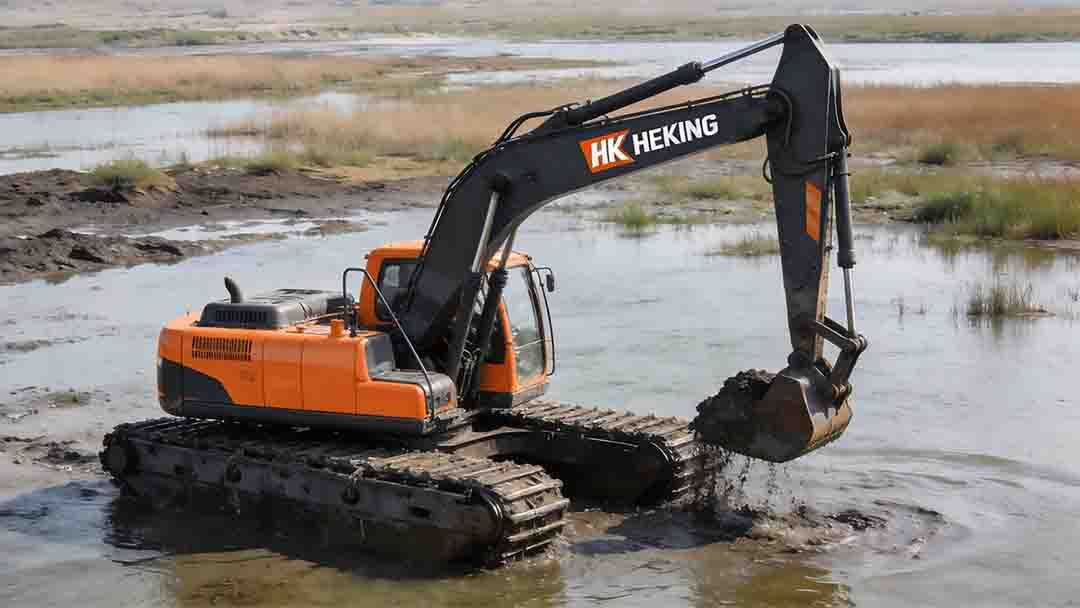
An amphibious excavator is a specialized excavator equipped with sealed pontoons instead of conventional crawler tracks. These pontoons distribute the machine's weight across a larger surface area, producing extremely low ground pressure that allows safe operation on:
Wetlands
Swamps
Marshes
Peatlands
Rivers
Lakes
Mud flats
Coastal areas
Flood zones
Many models can also float while performing dredging and maintenance work.
Why Choose an Amphibious Excavator Instead of a Standard Excavator?
Standard excavators often sink or become unstable in saturated soil. Amphibious excavators are specifically engineered for these challenging environments.
Key Advantages
Extremely low ground pressure
Excellent flotation capability
Increased operator safety
Higher productivity in soft terrain
Reduced project delays
Lower environmental disturbance
Suitable for inaccessible construction sites
These advantages make them the preferred solution for water-related engineering projects.
Common Applications
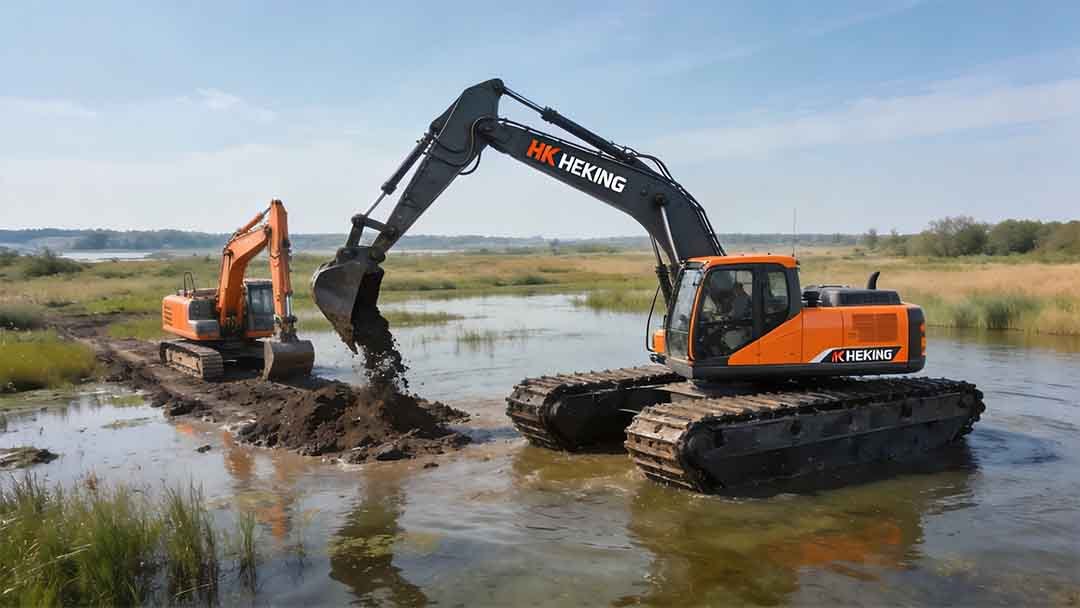
Before purchasing, ensure the machine matches your primary application.
Typical industries include:
River dredging
Canal maintenance
Lake restoration
Wetland conservation
Environmental remediation
Flood control
Pipeline installation
Oil & gas infrastructure
Mining support
Aquaculture development
Peat harvesting
Coastal engineering
Port maintenance
Different projects require different boom lengths, bucket capacities, and flotation systems.
Key Factors to Consider Before Buying
1. Machine Operating Weight
Machine size should match project requirements.
Typical options include:
| Operating Weight | Recommended Projects |
|---|---|
| 13–18 tons | Light maintenance |
| 20–25 tons | Municipal dredging |
| 30–36 tons | River engineering |
| 40–50 tons | Large-scale dredging |
| 60+ tons | Heavy industrial projects |
Larger machines generally offer higher productivity but require stronger transportation and support equipment.
2. Pontoon Design
Pontoon quality largely determines flotation performance.
Look for:
High-strength steel construction
Corrosion-resistant coatings
Reinforced welding
Internal buoyancy chambers
Heavy-duty rollers
Durable track chains
Easy maintenance access
A robust pontoon system extends equipment life while reducing maintenance costs.
3. Engine Performance
Choose engines that provide:
High torque
Low fuel consumption
Reliable cold starting
Easy parts availability
Global service support
Compliance with local emission standards
Reliable engine brands simplify long-term maintenance.
4. Boom and Arm Configuration
Project requirements determine the ideal digging reach.
Options include:
Standard boom
Long-reach boom
Extended arm
Dredging boom
Custom configurations
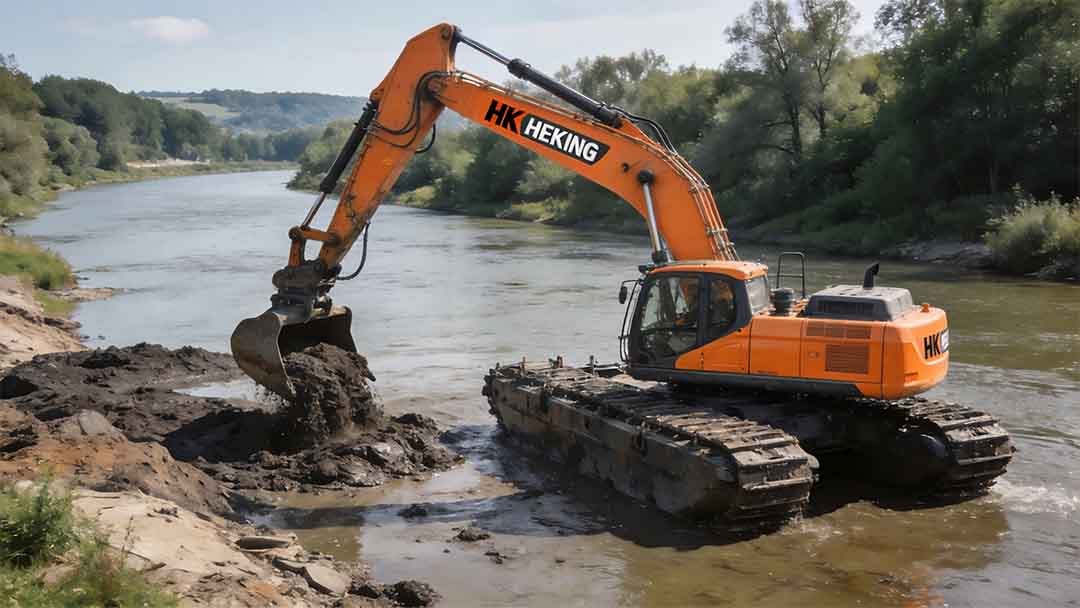
Long-reach excavators improve efficiency for river and canal dredging.
5. Hydraulic System
Hydraulic performance directly affects productivity.
Evaluate:
Pump capacity
Flow rate
Working pressure
Auxiliary hydraulic circuits
Attachment compatibility
A high-performance hydraulic system allows faster cycle times and supports multiple attachments.
6. Attachment Compatibility
Many buyers require one machine to perform multiple tasks.
Popular attachments include:
Dredging bucket
Mud bucket
Clamshell bucket
Hydraulic grab
Cutter head
Mulcher
Vibro hammer
Hydraulic breaker
Rake
Vegetation cutter
A versatile attachment system increases equipment utilization.
Safety Features to Evaluate
Working in wetlands requires enhanced safety.
Important features include:
Wide pontoons for stability
Sealed flotation chambers
Anti-slip walkways
Emergency escape routes
Protective guards
Rear-view cameras
LED work lights
Fire suppression options
ROPS/FOPS certified cab
These features improve both operator safety and operational efficiency.
Maintenance Considerations
Maintenance costs vary significantly between manufacturers.
Ask suppliers about:
Daily maintenance requirements
Greasing intervals
Hydraulic filter replacement
Spare parts availability
Technical documentation
Online support
Warranty coverage
Service response time
Selecting equipment with accessible service points reduces downtime.
Choosing the Right Manufacturer
Not all manufacturers specialize in amphibious equipment.
Evaluate suppliers based on:
Years of manufacturing experience
Export history
Production capacity
Engineering capabilities
Quality control
CE certification
ISO certification
Customer references
Spare parts inventory
Technical support
Customization capability
A reputable manufacturer provides better long-term value than simply offering the lowest price.
Questions to Ask Before Ordering
Before signing a purchase contract, ask:
Is the machine designed specifically for amphibious work?
Can the pontoon size be customized?
What attachments are available?
What is the delivery lead time?
Which certifications are included?
Is operator training available?
Are spare parts stocked internationally?
What warranty is provided?
Is technical support available after installation?
Can the machine be customized for local regulations?
These questions help reduce purchasing risks.
Why Customization Matters
Every project presents unique operating conditions.
Common customization options include:
Long-reach booms
Different pontoon widths
Additional buoyancy
Engine selection
Attachment packages
GPS systems
Camera systems
Lighting packages
Cold-weather packages
Tropical climate configurations
Customized machines often deliver higher productivity and lower operating costs over their service life.
Purchasing an amphibious excavator involves much more than comparing prices. Buyers should evaluate machine performance, flotation capability, hydraulic efficiency, attachment compatibility, maintenance requirements, and manufacturer expertise.
A carefully selected amphibious excavator can improve project efficiency, reduce downtime, and provide reliable performance in the most challenging wetland environments.
For contractors serving river maintenance, dredging, environmental restoration, and infrastructure projects, investing in the right equipment is essential for long-term operational success.
Frequently Asked Questions (FAQ)
Q1. What size amphibious excavator is suitable for river dredging projects?
A: Most medium to large river dredging projects use 20–40 ton amphibious excavators, depending on water depth, bucket capacity, and required digging reach.
Q2. Can amphibious excavators operate on both land and water?
A: Yes. They are designed to travel across soft ground, marshes, wetlands, and shallow water while maintaining stability and low ground pressure.
Q3. Are CE-certified amphibious excavators required for Europe?
A: Yes. Buyers in Europe typically require CE-compliant machines that meet applicable safety and regulatory requirements before import and operation.
Q4. What should Middle East buyers consider when purchasing an amphibious excavator?
A: Buyers should evaluate cooling performance for high temperatures, corrosion protection, hydraulic reliability, spare parts availability, and after-sales technical support.
Q5. How long does it usually take to manufacture an amphibious excavator?
A: Production typically ranges from 30 to 90 days depending on machine size, customization requirements, and factory scheduling.
Q6. Which attachments are most commonly purchased together with amphibious excavators?
A: Common attachments include mud buckets, dredging buckets, hydraulic grabs, vibro hammers, mulchers, and vegetation cutters.
Q7. What certifications should international buyers request?
A: Buyers commonly request CE certification, ISO quality management certification, inspection reports, and complete export documentation.
Q8. How important is after-sales support when buying an amphibious excavator?
A: It is critical. Reliable technical support, readily available spare parts, maintenance guidance, and warranty services help minimize downtime and reduce operating costs.