
Discover Reliable Chinese Suppliers for Wetland, Swamp, and Dredging Projects
China has become one of the world's leading manufacturing centers for amphibious excavators. With strong engineering capabilities, competitive production costs, and mature export experience, many Chinese manufacturers now supply amphibious equipment to contractors, government agencies, and rental companies across Europe, the Middle East, Southeast Asia, Africa, and South America.
Whether you are looking for a standard amphibious excavator, a heavy-duty swamp excavator, or a customized river dredging solution, choosing the right manufacturer is essential for long-term project success.
This guide introduces the major types of Chinese amphibious excavator manufacturers and explains how international buyers can evaluate suppliers before making purchasing decisions.
What Is an Amphibious Excavator?
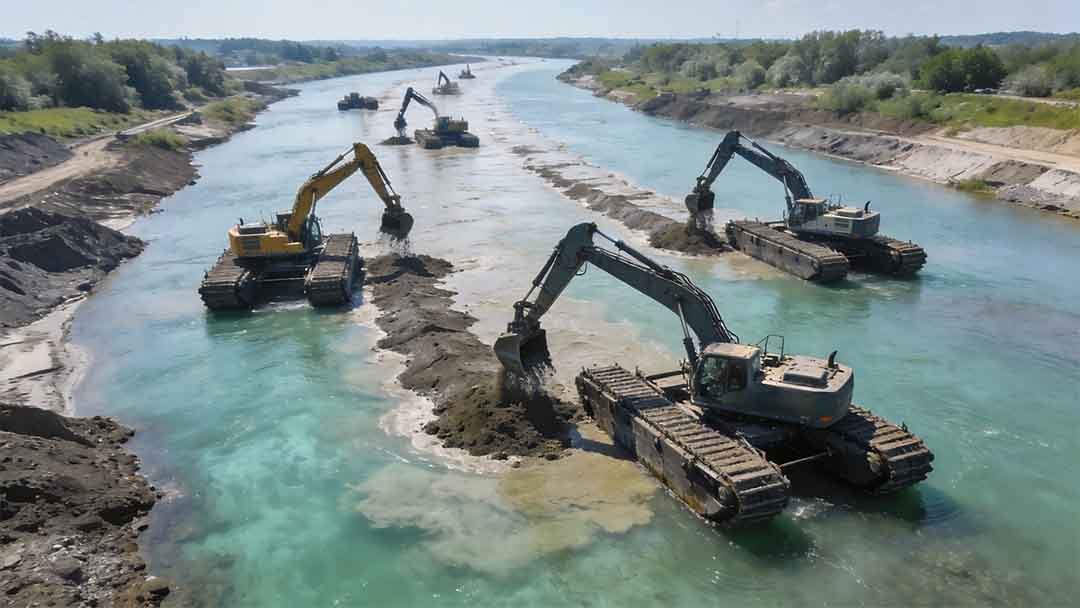
An amphibious excavator is a specialized machine equipped with a floating pontoon undercarriage that allows it to operate safely in wetlands, marshes, peatlands, shallow lakes, riverbanks, coastal zones, and other soft terrain where conventional excavators cannot work.
Typical applications include:
River dredging
Lake restoration
Wetland conservation
Swamp construction
Pipeline installation
Flood control
Environmental remediation
Coastal engineering
Mining ponds
Aquaculture projects
Unlike traditional tracked excavators, amphibious models distribute ground pressure over a much larger area, preventing sinking while maintaining excellent mobility.
Why Choose a Chinese Amphibious Excavator Manufacturer?
Chinese manufacturers have significantly improved product quality over the past decade while maintaining attractive pricing for international buyers.
Key advantages include:
Competitive factory pricing
Mature export logistics
OEM and ODM customization
International quality management systems
Wide product selection
Fast production capacity
Spare parts availability
Growing CE-compliant product offerings
Flexible configurations for different markets
Many manufacturers also provide technical support, remote guidance, operator training, and customized attachments.
Main Types of Amphibious Excavators Available
Standard Amphibious Excavator
Suitable for:
Wetland maintenance
Marsh projects
Aquaculture
Light dredging
Municipal engineering
Benefits include:
Lower operating costs
Easy transportation
High fuel efficiency
Heavy Duty Amphibious Excavator
Designed for:
Large-scale dredging
Mining projects
Coastal engineering
Port construction
Heavy earthmoving
Features include:
Reinforced pontoons
Higher lifting capacity
Improved stability
Larger hydraulic systems
Long Reach Amphibious Excavator
Ideal for:
River cleaning
Canal excavation
Deep dredging
Shoreline maintenance
Advantages include:
Extended working radius
Reduced machine repositioning
Higher productivity
Swamp Excavator
Swamp excavators are engineered specifically for extremely soft ground where conventional equipment quickly becomes immobilized.
Common industries include:
Oil & gas
Forestry
Wetland infrastructure
Environmental restoration
River Dredging Excavator
River dredging excavators are optimized for sediment removal and channel maintenance.
Typical projects include:
Flood prevention
Waterway maintenance
Reservoir cleaning
Navigation improvement
Amphibious Pontoon Undercarriage Options
One of the most important purchasing decisions is selecting the correct pontoon undercarriage according to the base excavator weight.
Common configurations include:
| Excavator Size | Typical Applications |
|---|---|
| 7–8 Ton Amphibious Pontoon | Small drainage projects |
| 12–15 Ton Amphibious Pontoon | Wetland construction |
| 20–22 Ton Amphibious Pontoon | Medium river dredging |
| 24–27 Ton Amphibious Pontoon | Large infrastructure |
| 30–33 Ton Amphibious Pontoon | Heavy-duty marine projects |
Proper pontoon selection improves flotation, safety, and operational efficiency.
How to Evaluate Chinese Amphibious Excavator Manufacturers
Choosing the lowest price is rarely the best strategy.
Instead, buyers should evaluate suppliers based on several key factors.
Manufacturing Experience
Look for manufacturers with years of experience specializing in amphibious equipment rather than general excavator production.
Engineering Capability
Reliable manufacturers should offer:
Custom engineering
Structural calculations
Hydraulic optimization
Floating stability analysis
Export Experience
Experienced exporters understand:
CE requirements
Shipping documentation
Packaging standards
International logistics
After-sales communication
Production Capacity
Ask about:
Factory size
Monthly output
Delivery schedule
Welding quality
Assembly process
Quality Control
Reliable suppliers typically perform inspections including:
Steel material testing
Weld inspection
Hydraulic pressure testing
Buoyancy testing
Functional testing
Final inspection before shipment
Spare Parts Support
International buyers should confirm:
Spare parts inventory
Parts delivery time
Hydraulic component brands
Technical documentation
Online support
Questions to Ask Before Purchasing
Before selecting a supplier, buyers should request detailed information regarding:
Factory certifications
Export destinations
Previous international projects
Production lead time
Warranty policy
Customized options
Available attachments
Hydraulic component suppliers
Steel specifications
Testing procedures
These questions help reduce purchasing risks and improve long-term equipment performance.
Industries That Use Amphibious Excavators
Chinese amphibious excavators are widely used in:
River dredging
Lake restoration
Wetland development
Environmental protection
Flood control
Municipal engineering
Aquaculture
Mining
Coastal construction
Oil and gas infrastructure
Pipeline installation
Forestry
Future Trends in China's Amphibious Excavator Industry
Manufacturers continue investing in new technologies, including:
Higher-strength steel structures
Improved corrosion protection
Intelligent hydraulic systems
GPS-assisted operation
Remote monitoring
Fuel-efficient engines
Electric control upgrades
Customized modular pontoons
As environmental regulations become stricter worldwide, demand for specialized wetland and dredging equipment is expected to continue growing.
China has become an important global source for high-quality amphibious excavators, offering solutions for projects ranging from small wetland maintenance to large-scale marine engineering. The best manufacturers combine advanced engineering, strict quality control, reliable export experience, and responsive after-sales service.
Instead of focusing only on equipment price, international buyers should carefully evaluate manufacturing capabilities, customization options, certifications, quality assurance, and long-term technical support. Selecting the right Chinese supplier can significantly improve project efficiency while reducing operating costs over the life of the equipment.
Frequently Asked Questions
Q1. Why are Chinese amphibious excavator manufacturers popular among international buyers?
A: Chinese manufacturers offer competitive pricing, advanced manufacturing capabilities, customizable solutions, and extensive export experience. Many also provide technical support, spare parts, and international shipping services.
Q2. How do I choose the right amphibious excavator for my project?
A: Consider your working environment, required operating depth, excavator size, soil conditions, lifting capacity, and project duration. Selecting the correct pontoon undercarriage and boom configuration is equally important.
Q3. Can Chinese manufacturers customize amphibious excavators for European and Middle Eastern markets?
A: Yes. Many manufacturers provide OEM and customized solutions, including different engine options, hydraulic systems, attachments, corrosion protection, language-specific documentation, and configurations designed to meet local operating requirements.
Q4. What certifications should I request before placing an order?
A: Buyers should ask about CE compliance where applicable, ISO quality management certification, material certificates, welding inspection reports, factory testing records, and export documentation.
Q5. What is the typical production lead time?
A: Standard models generally require 30–60 days, while customized amphibious excavators or large fleet orders may require additional manufacturing time depending on specifications and production schedules.
Q6. Which industries commonly purchase amphibious excavators?
A: Common industries include river dredging, wetland restoration, municipal engineering, flood control, coastal construction, mining, aquaculture, forestry, oil and gas, and environmental protection.
Q7. Are spare parts readily available after purchase?
A: Reputable manufacturers maintain inventories of critical spare parts and provide technical manuals, online support, and international shipping to minimize equipment downtime.
Q8. Is an amphibious excavator suitable for deep-water operations?
A: Amphibious excavators are primarily designed for shallow water, wetlands, marshes, and soft ground. For deeper water applications, specialized deep water amphibious excavator configurations with long reach booms and enhanced flotation systems may be recommended.
Q9. What attachments are commonly available for amphibious excavators?
A: Popular attachments include dredging buckets, clamshell buckets, hydraulic grabs, pile drivers, mulchers, rippers, vibro hammers, and various quick-coupler compatible tools to support different construction and environmental projects.
Q10. What should wholesale buyers in Europe and the Middle East prioritize when selecting a supplier?
A: Focus on proven export experience, compliance with local standards, customization capabilities, reliable delivery schedules, comprehensive warranty coverage, spare parts availability, and responsive after-sales technical support.