

Wetland restoration is an important environmental engineering activity focused on improving degraded wetlands, marshes, coastal areas, riversides, and other water-related ecosystems. These projects often involve removing unwanted vegetation, managing sediment, improving water flow conditions, restoring habitats, and maintaining ecological functions.
However, many wetland restoration sites present difficult working conditions. Soft soil, unstable ground, shallow water, mud, and limited accessibility can prevent conventional construction equipment from operating efficiently.
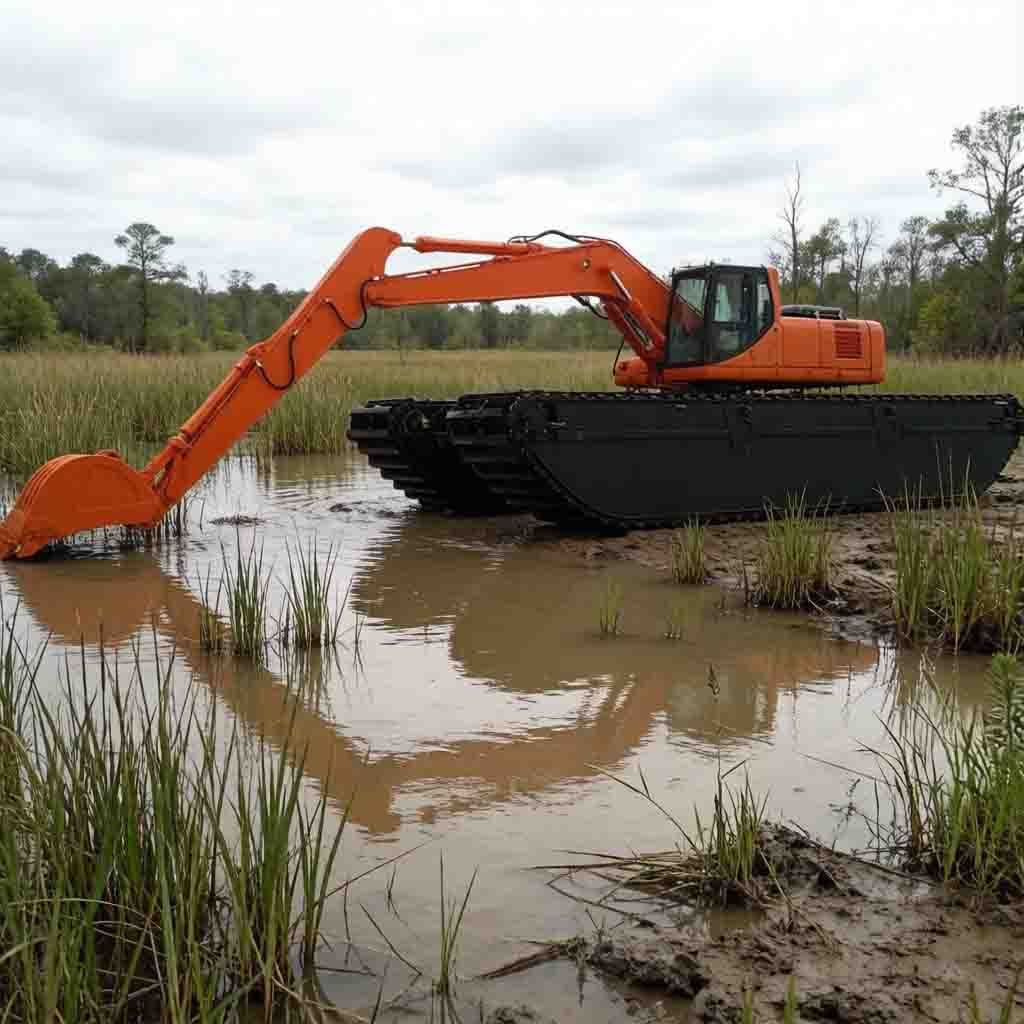
Amphibious excavators provide a practical solution for these challenging environments. Equipped with amphibious pontoon undercarriage systems, these machines are designed to operate in areas where standard excavators may experience mobility limitations.
For environmental contractors and project owners, selecting suitable wetland restoration equipment helps improve project accessibility, reduce operational difficulties, and support more efficient restoration activities.
Amphibious excavators are commonly applied in wetland-related operations such as marsh restoration, sediment management, shoreline improvement, and ecological construction work. Industry applications show that amphibious equipment can help contractors access soft soils and shallow water areas while reducing the need for temporary access structures.
Industry Background and Challenges
Wetland restoration projects are usually carried out in complex natural environments where environmental protection requirements and construction efficiency must be considered together.
Unlike ordinary construction sites, wetlands often include:
Soft and saturated soil conditions
Marsh and swamp terrain
Shallow water areas
Unstable working surfaces
Limited transportation access
Sensitive ecological environments
These conditions create several challenges for project operators.
Limited Equipment Accessibility
Standard excavators are mainly designed for stable land surfaces. When working in wetlands, their higher ground pressure and limited flotation capability may reduce mobility.
Project teams may need equipment specifically designed for soft terrain operations.
Difficult Material Handling
Wetland restoration often requires activities such as:
Sediment movement
Vegetation removal
Ground shaping
Channel maintenance
The equipment must maintain stability while performing excavation operations in difficult environments.
Environmental Considerations
Many restoration projects require careful operation to minimize unnecessary disturbance to surrounding areas.
Amphibious equipment uses wide pontoon structures to improve flotation and distribute machine weight across soft surfaces, making it suitable for projects where conventional equipment access is difficult.
Project Efficiency Requirements
Environmental contractors and engineering companies need machinery that can:
Reach difficult locations
Operate continuously in wet conditions
Adapt to different project requirements
Support various attachments and working methods
Therefore, choosing the correct amphibious excavator solution is an important factor in wetland restoration project planning.
Recommended Product Solution
Wetland restoration projects require equipment that can work efficiently in soft terrain, shallow water, marshes, and unstable ground conditions. HEKING amphibious excavators and amphibious pontoon undercarriage systems provide a practical equipment solution for contractors and environmental engineering companies working in these challenging environments.
Amphibious excavators combine excavator working functions with specialized floating undercarriage systems. The amphibious pontoon structure helps improve machine stability and mobility in areas where conventional crawler excavators may have difficulty operating.
For wetland restoration applications, HEKING provides different equipment solutions based on excavator capacity requirements, including:
Amphibious Pontoon Undercarriage Solutions
HEKING AUP series amphibious pontoon undercarriages are designed for converting suitable excavators into machines capable of operating in soft ground and shallow water environments.
Available models include:
AUP80 Amphibious Pontoon
Suitable for 7-8 ton excavators
AUP140 Amphibious Pontoon
Suitable for 12-15 ton excavators
AUP220 Amphibious Pontoon
Suitable for 20-22 ton excavators
AUP250 Amphibious Pontoon
Suitable for 24-27 ton excavators
AUP330 Amphibious Pontoon
Suitable for 30-33 ton excavators
These solutions allow contractors to select equipment according to project scale, machine requirements, and working conditions.
Amphibious Excavator Solutions
HEKING amphibious excavators are developed for wetland construction, swamp operations, river projects, dredging work, and environmental engineering applications.
Recommended models include:
HEKING HK150SD Amphibious Excavator
Suitable for:
Small and medium wetland restoration projects
Marsh maintenance
Soft ground construction
Environmental improvement projects
The compact working class makes it suitable for projects requiring flexible operation in restricted areas.
HEKING HK200SD Amphibious Excavator
Suitable for:
Wetland restoration
River improvement projects
Sediment handling
Shallow water operations
This equipment provides a balance between working capability and mobility for medium-scale environmental projects.
HEKING HK300SD Amphibious Excavator
Suitable for:
Large wetland restoration projects
River dredging
Coastal environmental engineering
Large-scale earthwork operations
The larger working class supports projects requiring increased excavation capability.
HEKING HK400SD Amphibious Excavator
Suitable for:
Heavy-duty wetland engineering
Large dredging projects
Deep water-related construction environments
It is designed for applications requiring higher operating capacity.
Amphibious excavators are widely applied in restoration projects because they can perform excavation, sediment movement, shoreline shaping, and vegetation management tasks in soft and wet environments. Industry applications show that amphibious machines are commonly used for marsh restoration, shoreline stabilization, sediment placement, and habitat improvement projects.
How the Solution Works
1. Amphibious Pontoon System Provides Ground Support
Traditional excavators mainly depend on crawler tracks designed for solid ground. In wetlands, saturated soil and mud can reduce traction and increase the risk of machine sinking.
The amphibious pontoon undercarriage replaces the conventional undercarriage structure with floating pontoons and extended tracks.
This design helps:
Increase contact area with the ground
Reduce ground pressure
Improve stability on soft terrain
Support operation in shallow water areas
2. Excavation Operations in Wetland Environments
During restoration projects, amphibious excavators can perform various construction tasks, including:
Sediment excavation
Soil shaping
Waterway maintenance
Material relocation
Shoreline adjustment
The excavator upper structure maintains standard excavation functions while the amphibious undercarriage improves access capability.
3. Supporting Environmental Engineering Processes
Wetland restoration often involves multiple stages:
Site Preparation
Equipment accesses difficult areas where traditional machinery may require additional temporary access solutions.
Sediment Management
Excavators help move accumulated sediment and reshape project areas.
Terrain Improvement
Machines support the creation of suitable landforms for ecological restoration.
Long-Term Maintenance
Amphibious equipment can also support ongoing maintenance activities after initial restoration.
Amphibious excavators are recognized as useful equipment for environmental projects because they can operate on soft and wet terrain while performing tasks such as sediment removal, shoreline shaping, and ecological restoration support.
Application Scenarios
Scenario 1 Industry:
Environmental Protection
Project Type:
Wetland ecosystem restoration project
Application:
Sediment handling, terrain improvement, habitat restoration support
Working Environment:
Marsh areas
Soft soil
Shallow water
Wetland vegetation zones
Buyer Type:
Environmental contractors
Government ecological projects
Restoration engineering companies
Scenario 2 Industry:
Water Engineering
Project Type:
River and lake restoration project
Application:
Riverbank improvement, sediment removal, water channel maintenance
Working Environment:
River edges
Flood areas
Muddy terrain
Shallow water environments
Buyer Type:
Water engineering companies
Infrastructure contractors
Municipal project owners
Scenario 3 Industry:
Coastal Engineering
Project Type:
Coastal wetland protection project
Application:
Shoreline improvement and sediment management
Working Environment:
Coastal marshes
Tidal zones
Soft coastal soil
Buyer Type:
Marine engineering companies
Coastal restoration contractors
Environmental organizations
Scenario 4 Industry:
Agriculture and Land Management
Project Type:
Wetland land improvement project
Application:
Drainage improvement, vegetation management, land shaping
Working Environment:
Agricultural wetlands
Irrigation areas
Low-bearing-capacity soil
Buyer Type:
Agricultural contractors
Land management companies
Scenario 5 Industry:
Infrastructure Construction
Project Type:
Flood control and water management project
Application:
River maintenance, embankment construction support, sediment control
Working Environment:
Flood-prone areas
River channels
Soft ground construction zones
Buyer Type:
Infrastructure contractors
Engineering companies
Government projects
echnical Requirements for This Application
Selecting suitable equipment for wetland restoration requires consideration of project conditions, operating environment, and equipment capability. Different restoration projects may involve different terrain conditions, water depth, excavation requirements, and working schedules.
Professional buyers should evaluate the following factors before selecting amphibious restoration equipment.
Capacity Requirements
The required excavator class depends on project scale and working tasks.
Small and medium restoration projects may require compact amphibious solutions for:
Vegetation management
Small-scale sediment handling
Local wetland improvement
Larger environmental engineering projects may require higher-capacity amphibious excavators for:
River restoration
Large sediment movement
Coastal wetland engineering
Extended excavation operations
HEKING provides amphibious pontoon solutions covering multiple excavator classes, including:
7-8 ton class
12-15 ton class
20-22 ton class
24-27 ton class
30-33 ton class
This allows buyers to select equipment based on project requirements.
Operating Conditions
Wetland restoration equipment should be selected according to actual working environments, including:
Soft Ground Conditions
Wetlands commonly contain saturated soil, mud, and low-bearing-capacity surfaces.
Equipment should provide:
Improved flotation capability
Stable operation
Reduced ground pressure
Amphibious excavators are commonly used in soft soils and shallow water areas where conventional equipment may have difficulty accessing the work zone.
Shallow Water Operations
Some restoration projects require equipment to operate in:
Marsh areas
River edges
Flood zones
Tidal wetlands
Amphibious pontoon systems help excavators maintain mobility in these environments while continuing excavation operations.
Environmental Sensitivity
Wetland projects often require careful construction methods because surrounding habitats may need protection.
Equipment selection should consider:
Reduced surface disturbance
Controlled operation
Suitable attachments
Operator experience
Industry applications show amphibious excavators are used for shoreline shaping, sediment management, and habitat restoration support because their low-pressure designs help reduce impact on sensitive terrain.
Product Advantages for This Application
HEKING amphibious equipment provides practical advantages for contractors, engineering companies, and environmental project buyers.
1. Suitable for Soft Terrain Restoration Projects
Designed for wetlands, marshes, and unstable ground conditions where standard excavators may face access limitations.
2. Improved Mobility in Wetland Environments
The amphibious pontoon undercarriage helps machines move through:
Muddy areas
Soft soil
Shallow water
Marsh environments
3. Flexible Equipment Selection
Available amphibious pontoon models support different excavator weight classes, helping buyers select suitable configurations according to project requirements.
4. Designed for Environmental Engineering Applications
Suitable for applications including:
Wetland restoration
River improvement
Ecological construction
Water environment projects
5. Supports Multiple Working Operations
Amphibious excavators can support:
Excavation
Sediment handling
Terrain shaping
Material movement
6. Suitable for Difficult Access Areas
Helps contractors reach locations where temporary access roads or conventional construction methods may be difficult to apply.
Some wetland projects use amphibious equipment specifically because traditional access methods may require additional site preparation.
7. Available with Customized Configurations
HEKING provides OEM and ODM services for special project requirements, including:
Long-reach excavator solutions
Extendable amphibious chassis
Additional side pontoons
Spud pile systems
8. Supports International Project Requirements
HEKING exports amphibious equipment to:
Western Europe
Eastern Europe
Southeast Asia
Eastern Asia
Oceania
Africa
The company supports overseas distributors, contractors, and engineering partners.
9. Factory Direct Supply Support
As a manufacturer, HEKING integrates:
Engineering design
Manufacturing
Product customization
International trade support
to provide long-term supply solutions.
Product Selection Guide
Before choosing amphibious restoration equipment, buyers should evaluate several important factors.
1. Understand Project Conditions
Consider:
Soil conditions
Water depth
Terrain accessibility
Environmental restrictions
Operation period
Different wetland environments require different equipment solutions.
2. Select Suitable Equipment Capacity
Buyers should match equipment size with:
Excavation workload
Required productivity
Transportation conditions
Attachment requirements
A properly selected machine can improve project efficiency and reduce unnecessary operating costs.
3. Evaluate Amphibious Undercarriage Requirements
Important factors include:
Excavator weight compatibility
Pontoon configuration
Working environment
Mobility requirements
HEKING AUP series pontoons provide options for different excavator classes.
4. Consider Supplier Engineering Capability
For international buyers, supplier capability is important.
Evaluation factors include:
Manufacturing experience
Technical support
Customization ability
Export experience
After-sales communication
5. Confirm Maintenance Support
Buyers should consider:
Spare parts availability
Technical communication
Maintenance guidance
Long-term cooperation capability
Customization and Engineering Support
HEKING provides OEM and ODM services for customers requiring special amphibious equipment solutions.
Customization options include:
Long Reach Configurations
Designed for projects requiring extended working range.
Applications may include:
Deep excavation areas
Water-related engineering
Extended reach operations
Extendable Amphibious Chassis
Suitable for projects requiring additional stability or specific operating conditions.
Additional Side Pontoons
Can provide additional flotation support according to project requirements.
Spud Pile Systems
Available for applications requiring improved positioning capability in water environments.
HEKING's engineering team evaluates customer requirements and develops equipment solutions based on actual working conditions.
Manufacturing and Supply Capability
Anhui Hekuang Environmental Technology Co., Ltd. is a professional manufacturer specializing in amphibious equipment and construction machinery.
The company operates:
Production base: More than 100,000 square meters
Employees: 125
Technical specialists: 42
Senior professional engineers: 10
HEKING integrates:
Product research
Engineering design
Manufacturing
International trade
The company provides amphibious excavators, amphibious pontoon undercarriage systems, crawler excavators, material handling machines, and amphibious carriers for global customers.
With export experience covering multiple international markets, HEKING supports distributors, contractors, and project owners with stable supply capability and customized engineering solutions.
Related Products
AUP80 Amphibious Pontoon Undercarriage
Application Role:
Suitable for small excavator-based wetland restoration projects.
Reason:
Designed for 7-8 ton excavators, AUP80 provides an amphibious undercarriage solution for soft ground, marsh areas, and shallow water environments where compact equipment is required.
AUP140 Amphibious Pontoon Undercarriage
Application Role:
Suitable for small and medium wetland engineering projects.
Reason:
Designed for 12-15 ton excavators, AUP140 helps contractors convert suitable excavators into amphibious machines for environmental restoration applications.
AUP220 Amphibious Pontoon Undercarriage
Application Role:
Suitable for medium-scale restoration and dredging projects.
Reason:
Designed for 20-22 ton excavators, this solution supports projects requiring higher working capacity in wetlands and shallow water areas.
AUP250 Amphibious Pontoon Undercarriage
Application Role:
Suitable for larger environmental engineering applications.
Reason:
Designed for 24-27 ton excavators, AUP250 provides additional equipment options for contractors handling larger restoration requirements.AUP330 Amphibious Pontoon Undercarriage
Application Role:
Suitable for large wetland restoration and water engineering projects.
Reason:
Designed for 30-33 ton excavators, AUP330 supports demanding applications requiring larger equipment capacity.
HK150SD Amphibious Excavator
Application Role:
Small and medium wetland restoration operations.
Reason:
Suitable for flexible operations in marshes, wetlands, and soft terrain environments.
HK200SD Amphibious Excavator
Application Role:
Medium-scale ecological engineering projects.
Reason:
Suitable for wetland construction, river improvement, and sediment handling applications.
HK300SD Amphibious Excavator
Application Role:
Large wetland restoration and dredging projects.
Reason:
Designed for applications requiring higher excavation capability and operational efficiency.
FAQ
Q1: What is an amphibious excavator used for in wetland restoration?
A:
An amphibious excavator is used for operations in soft soil, marshes, shallow water, and wetland environments. It supports tasks such as sediment handling, terrain shaping, vegetation management, and ecological construction activities.
Q2: Why are standard excavators not suitable for some wetland projects?
A:
Standard excavators are mainly designed for stable ground conditions. Wetlands often contain soft soil, mud, and unstable surfaces, making mobility and stability more difficult.
Amphibious excavators use specialized pontoon undercarriage systems to improve access in these environments.
Q3: What types of wetland restoration projects can use amphibious excavators?
A:
Applications include:
Wetland rehabilitation
River restoration
Marsh improvement
Shoreline projects
Sediment management
Environmental engineering projects
Amphibious excavators are used in restoration work because they can operate in soft and shallow-water environments while performing excavation-related tasks.
Q4: How do amphibious pontoons improve equipment performance?
A:
Amphibious pontoons increase flotation capability and distribute machine weight over a larger contact area. This helps equipment operate on soft ground and wet terrain.
Q5: Which amphibious pontoon model should I choose?
A:
The selection depends on excavator weight class, project requirements, terrain conditions, and working environment.
HEKING provides AUP series solutions for:
7-8 ton excavators
12-15 ton excavators
20-22 ton excavators
24-27 ton excavators
30-33 ton excavators
Q6: Can amphibious excavators work in shallow water?
A:
Yes. Amphibious excavators are designed for wet environments including shallow water areas, marshes, and soft ground conditions.
They are commonly applied where conventional machines have difficulty accessing the work area.
Q7: Does HEKING provide customized amphibious equipment solutions?
A:
Yes. HEKING provides OEM and ODM services including customized amphibious chassis solutions, long-reach configurations, additional side pontoons, and special equipment requirements.
Q8: What information should buyers provide when requesting an amphibious excavator solution?
A:
Buyers should provide:
Excavator weight class
Project application
Working environment
Water depth conditions
Required operating capability
Special configuration requirements
This information helps engineers recommend suitable equipment.
Q9: Does HEKING support international customers?
A:
Yes. HEKING supplies amphibious equipment to overseas markets including Western Europe, Eastern Europe, Southeast Asia, Eastern Asia, Oceania, and Africa.
The company supports distributors, contractors, and project owners with manufacturing and export services.
Q10: How can buyers start a wetland restoration equipment project?
A:
Buyers can contact HEKING with project information, equipment requirements, and working conditions. The engineering team can provide suitable amphibious equipment recommendations.
Wetland Restoration Equipment Solution from HEKING
Wetland restoration projects require reliable equipment designed for soft terrain, shallow water, and challenging environmental conditions.
HEKING provides amphibious excavators and amphibious pontoon undercarriage solutions for:
Wetland restoration
Environmental engineering
River improvement
Marsh projects
Water-related construction
Contact HEKING for:
Equipment quotation
Technical consultation
Project evaluation
Customized amphibious solutions
Distributor cooperation
Our engineering team works with global contractors, importers, and project owners to provide suitable amphibious equipment solutions.