
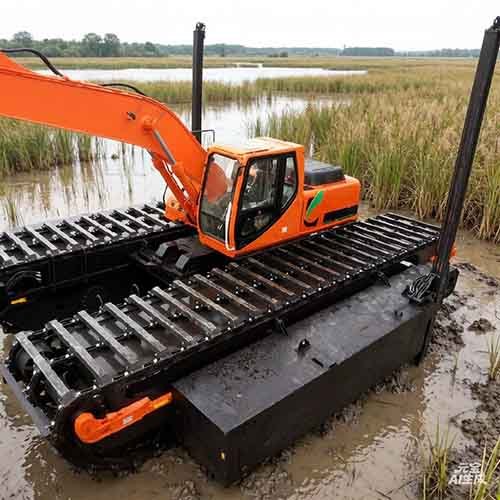
Wetland construction, river dredging, and environmental restoration projects often involve challenging working conditions such as soft soil, unstable ground, shallow water, and muddy terrain. Traditional excavators are mainly designed for solid ground operations and may experience limitations when working in these environments.
An amphibious excavator is developed to solve these challenges by combining excavator functions with a specially designed floating undercarriage system. Through the use of amphibious pontoons, crawler systems, and customized structures, the machine can operate in areas where conventional construction equipment has difficulty reaching.
Understanding the amphibious excavator working principle is important for engineers, contractors, importers, and project managers who need equipment for wetlands, marshes, rivers, and water-based construction applications.
This article explains how amphibious excavators work, the role of each major component, and key considerations when selecting equipment for industrial projects.
What Is an Amphibious Excavator?
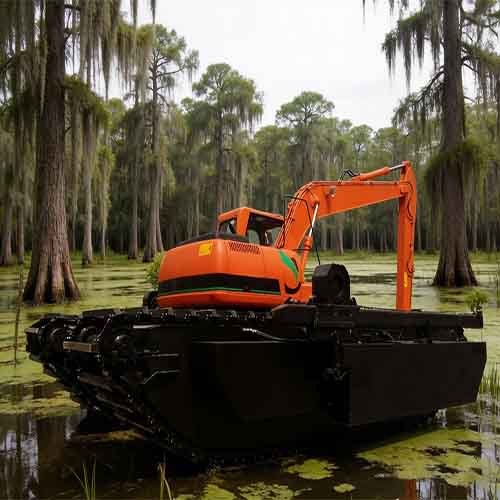
An amphibious excavator is a specialized construction machine designed for excavation, dredging, and material handling operations in soft ground and water environments.
Unlike standard crawler excavators, an amphibious excavator uses an amphibious undercarriage system consisting of floating pontoons and crawler tracks. This structure helps distribute machine weight over a larger contact area, allowing the equipment to work on unstable surfaces such as swamps, marshes, wetlands, and shallow water areas.
The main purpose of an amphibious excavator is to provide excavation capability in locations where normal equipment may face difficulties due to insufficient ground support or limited accessibility.
Common working environments include:
Wetland construction sites
River dredging areas
Swamp excavation projects
Flood control projects
Environmental restoration sites
Coastal engineering projects
How Does an Amphibious Excavator Work?
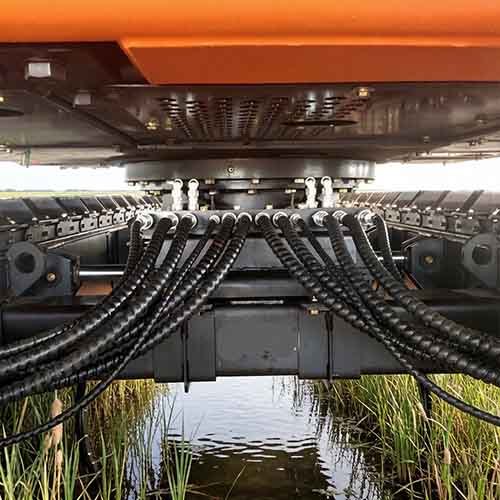
The working principle of an amphibious excavator is based on the cooperation between the excavator upper structure, amphibious undercarriage, hydraulic system, and working attachment.
The machine operates through several key processes:
Floating Support Through Amphibious Pontoons
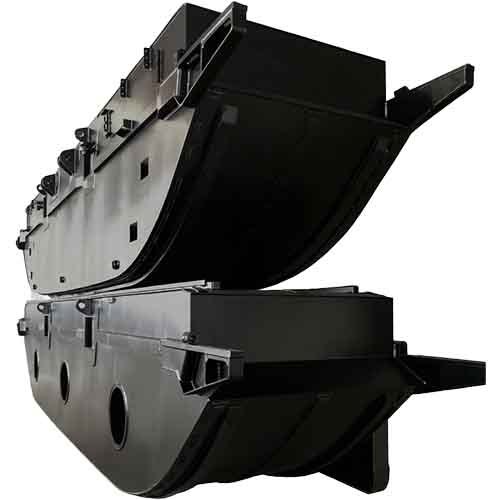
The amphibious pontoon system is the foundation of the machine's ability to operate on soft terrain and water environments.
Compared with standard excavator tracks, floating pontoons provide additional buoyancy and improve load distribution. This reduces the pressure applied to weak ground conditions and helps maintain machine stability during excavation operations.
HEKING provides amphibious pontoon undercarriage solutions for different excavator classes, including:
Crawler Track Movement System
The crawler system installed on amphibious pontoons allows the machine to move through mud, soft soil, and shallow water areas.
The tracks provide traction during movement and help the excavator travel across difficult surfaces while maintaining operational stability.
The combination of crawler tracks and floating pontoons allows the equipment to perform excavation and dredging work in areas unsuitable for conventional excavators.
Hydraulic Excavation Operation
The upper excavator structure works through a hydraulic system that controls:
Boom movement
Arm operation
Bucket digging
Machine rotation
Attachment operation
The hydraulic system transfers engine power into excavation force, allowing the machine to perform digging, dredging, and material handling tasks.
Depending on project requirements, amphibious excavators can be equipped with different attachments, such as dredging buckets and other specialized tools.
Stability Control in Difficult Working Conditions
One important part of the amphibious excavator working principle is maintaining stability during operations in unstable environments.
Wetlands, marshes, and shallow water areas usually have lower bearing capacity compared with normal construction sites. The amphibious undercarriage helps improve machine stability by increasing the supporting area and reducing ground pressure.
For deeper water or special working conditions, some amphibious excavator solutions can be equipped with additional systems such as spud piles. These components help improve positioning stability when performing excavation or dredging operations.
Long Reach Working Capability
Many wetland and dredging projects require excavation beyond the normal working range of standard excavators.
A long reach amphibious excavator combines the floating undercarriage system with an extended boom and arm configuration. This design allows operators to reach farther excavation areas, which is suitable for:
Deep water dredging
River maintenance
Canal cleaning
Coastal engineering projects
The working range depends on the machine configuration and project requirements.
Key Features and Advantages
Amphibious excavators are designed around the challenges of soft terrain and water-based construction environments. Their main characteristics include specialized structures that improve accessibility, stability, and operational flexibility.
Operation on Soft Ground and Wetland Areas
The amphibious undercarriage allows excavators to operate in areas with weak ground conditions.
Compared with standard construction equipment, amphibious excavators are suitable for locations where soil conditions may include:
Muddy surfaces
Marsh areas
Swamp environments
Flooded construction zones
Shallow water sections
This capability makes them practical equipment solutions for environmental and infrastructure projects.
Improved Ground Adaptability
The combination of floating pontoons and crawler tracks provides better adaptability for changing terrain conditions.
During operation, the pontoon system supports the machine weight while crawler tracks provide movement capability. This combination enables excavation work in areas where traditional excavators may require additional ground preparation.
Multiple Equipment Configurations
Different projects require different machine capacities and working ranges.
HEKING provides amphibious excavator solutions in different tonnage classes, including:
HK150SD Amphibious Excavator
HK200SD Amphibious Excavator
HK300SD Amphibious Excavator
The selection of machine size depends on excavation depth, material conditions, working area, and project requirements.
Application Flexibility
Amphibious excavators can be used with different attachments and configurations depending on the application.
Typical configurations include:
Standard excavation bucket
Dredging bucket
Long reach equipment
Customized amphibious undercarriage systems
This flexibility allows contractors to adapt equipment for different engineering environments.
Main Applications
Amphibious excavators are applied in various industries where construction operations are required in wetlands, rivers, shallow water, and soft terrain areas.
Industry: Construction
Application:
Wetland construction, foundation preparation, and soft ground excavation projects.
Requirement:
Construction companies need equipment that can access unstable areas without extensive ground improvement work.
Suitable Solution:
An amphibious excavator with floating pontoons and crawler movement capability provides a practical solution for excavation tasks in difficult terrain.
Industry: Mining
Application:
Mining site development, sediment removal, and material handling in wet mining environments.
Requirement:
Mining projects may require machinery capable of operating near water bodies or areas with unstable soil conditions.
Suitable Solution:
Heavy duty amphibious excavators can be selected for projects requiring additional working capacity and stability.
Industry: Agriculture
Application:
Agricultural water management, drainage improvement, and irrigation channel maintenance.
Requirement:
Agricultural areas may include muddy fields, canals, and low-bearing-capacity ground.
Suitable Solution:
Compact amphibious excavator solutions can support maintenance work in narrow waterways and soft terrain areas.
Industry: Marine and Coastal Engineering
Application:
River dredging, coastal maintenance, and shallow water construction.
Requirement:
Marine projects require equipment capable of operating close to or directly within water environments.
Suitable Solution:
Long reach amphibious excavators are suitable for dredging and excavation tasks where extended working distance is required.
Industry: Energy
Application:
Oil and gas pipeline construction, maintenance corridors, and infrastructure preparation.
Requirement:
Pipeline projects may cross wetlands, swamps, and environmentally sensitive areas.
Suitable Solution:
Amphibious excavators provide access solutions for excavation operations in challenging terrain conditions.
Industry: Infrastructure and Environmental Projects
Application:
Flood control, river improvement, and wetland restoration.
Requirement:
Environmental projects often require low-impact equipment that can work in sensitive natural environments.
Suitable Solution:
Wetland excavators and amphibious equipment can support restoration and water management activities.
Important Factors to Consider
Selecting a suitable amphibious excavator requires careful evaluation of project conditions, operating environment, and equipment configuration. Professional buyers should consider several factors before purchasing or importing this type of machinery.
Working Environment Assessment
The first step is understanding the actual job site conditions.
Important factors include:
Soil type
Water depth
Ground bearing capacity
Excavation distance
Required working area
Material type
For example, shallow wetland excavation may require a different configuration compared with deep water dredging projects.
Equipment Size and Capacity Requirements
Amphibious excavators are available in different tonnage classes to match different project requirements.
Buyers should evaluate:
Required digging force
Excavation volume
Attachment requirements
Transportation limitations
Project duration
A smaller amphibious excavator may be suitable for light wetland maintenance, while larger machines may be selected for river dredging, flood control, and heavy construction projects.
Amphibious Undercarriage Selection
The amphibious pontoon undercarriage is a key component affecting machine performance.
Buyers should confirm:
Excavator weight compatibility
Pontoon size
Floating capability
Track configuration
Operating water depth requirements
HEKING provides amphibious pontoon solutions designed for different excavator classes, including AUP80, AUP140, AUP220, AUP250, and AUP330 series.
Supplier Manufacturing Capability
For international buyers, supplier capability is an important consideration.
A professional manufacturer should provide:
Engineering support
Customized equipment solutions
Production capability
Export experience
Technical communication support
HEKING specializes in amphibious equipment manufacturing and provides solutions for global distributors, contractors, and engineering companies.
Maintenance and Service Considerations
Because amphibious excavators often work in wet and muddy environments, regular inspection and maintenance are important.
Buyers should consider:
Spare parts availability
Maintenance procedures
Technical support
Operator training requirements
Proper maintenance helps maintain stable operation and extends equipment service life.
Amphibious Excavator Comparison
Different excavation solutions have different advantages depending on the working environment.
Standard Excavator vs Amphibious Excavator
| Item | Standard Excavator | Amphibious Excavator |
|---|---|---|
| Working Surface | Solid ground | Wetland, mud, shallow water |
| Undercarriage | Standard crawler | Floating pontoon undercarriage |
| Ground Adaptability | Limited in soft terrain | Designed for unstable areas |
| Main Applications | General construction | Dredging, wetlands, environmental projects |
| Water Operation | Limited | Suitable for water-related operations |
A standard excavator is commonly used for normal construction sites, while an amphibious excavator is developed for projects involving weak ground conditions and water environments.
Standard Amphibious Excavator vs Long Reach Amphibious Excavator
| Item | Standard Amphibious Excavator | Long Reach Amphibious Excavator |
|---|---|---|
| Working Range | Standard excavation distance | Extended excavation distance |
| Typical Use | Wetland excavation, maintenance | Deep water dredging, river projects |
| Configuration | Standard boom and arm | Extended boom and arm system |
| Project Type | General wetland work | Special reach requirements |
The suitable choice depends on excavation distance, project depth, and operational requirements.
Buying Guide for Amphibious Excavators
Before purchasing an amphibious excavator, buyers should prepare technical requirements and communicate project details with the manufacturer.
Define Project Requirements
Buyers should provide information such as:
Project location
Working environment
Required machine capacity
Excavation depth
Water conditions
Expected attachments
This information helps suppliers recommend suitable equipment configurations.
Evaluate Technical Specifications
Important specifications may include:
Excavator operating weight
Maximum digging reach
Bucket capacity
Machine dimensions
Pontoon configuration
Engine and hydraulic system information
The final configuration should match actual project requirements rather than selecting equipment based only on machine size.
Ask Suppliers Important Questions
Professional buyers may ask suppliers:
Can the equipment be customized?
What working environments is the machine designed for?
What pontoon system is suitable for my excavator class?
What spare parts are available?
What technical support is provided?
Consider Long-Term Cooperation
For distributors and contractors, choosing a reliable manufacturing partner is important.
Factors to evaluate include:
Manufacturing experience
Export capability
Product range
Engineering support
Communication efficiency
A stable supplier relationship can support future projects and equipment expansion.
Related Products
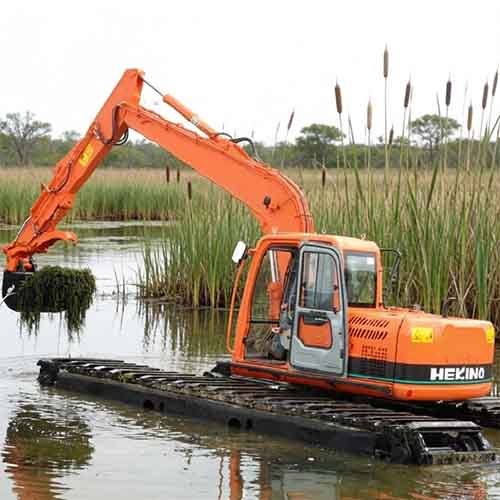
HK150SD Amphibious Excavator
Reason:
Suitable for buyers looking for a compact amphibious excavator solution for wetland, swamp, and shallow water operations.
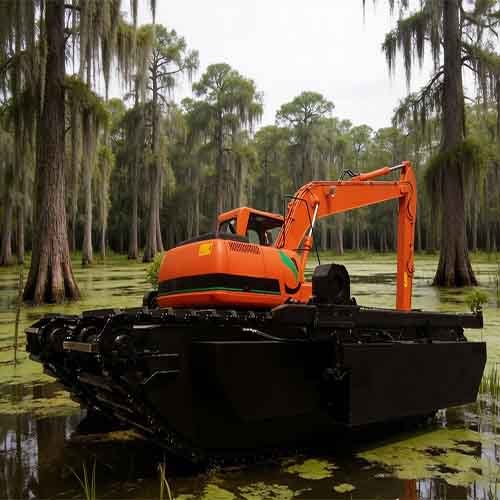
HK200SD Amphibious Excavator
Reason:
Designed for projects requiring a medium-class amphibious excavator for dredging, wetland construction, and soft terrain applications.
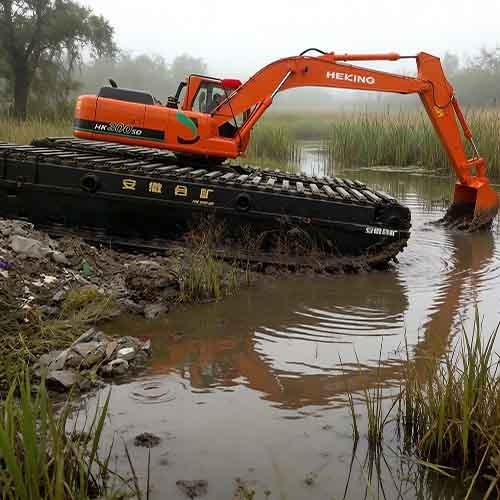
HK300SD Amphibious Excavator
Reason:
Suitable for larger projects requiring increased excavation capability for river dredging, flood control, and environmental engineering applications.
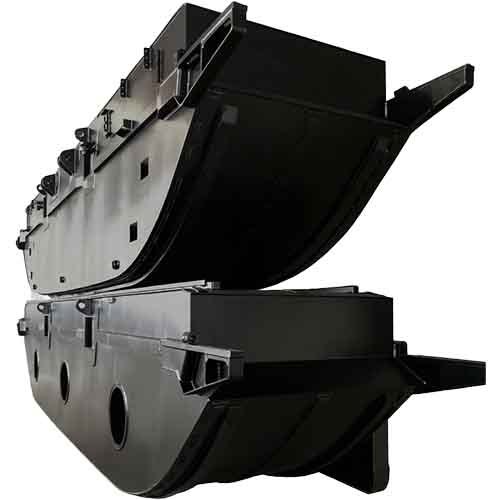
Amphibious Pontoon Undercarriage
Reason:
Provides floating support solutions for converting suitable excavators into amphibious working equipment.
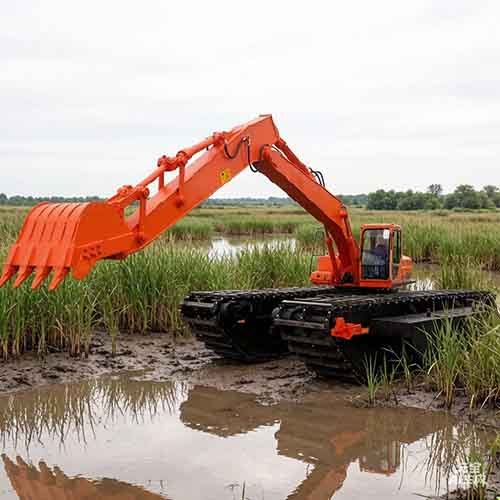
Long Reach Amphibious Excavator
Reason:
Developed for projects requiring extended working distance, including deep water dredging and river maintenance.
FAQ
Q1: What is the working principle of an amphibious excavator?
A:
An amphibious excavator works by combining a conventional excavator upper structure with a floating amphibious undercarriage system. The pontoons provide buoyancy and support, while crawler tracks allow movement across soft ground, mud, and shallow water areas.
Q2: What makes an amphibious excavator different from a standard excavator?
A:
The main difference is the undercarriage system. Standard excavators are designed for stable ground, while amphibious excavators use floating pontoons and crawler systems to operate in wetlands, swamps, and water-related environments.
Q3: Where are amphibious excavators commonly used?
A:
Amphibious excavators are commonly used in wetland construction, river dredging, flood control projects, environmental restoration, coastal engineering, and other applications involving soft terrain or shallow water.
Q4: How do amphibious pontoons improve machine operation?
A:
Amphibious pontoons increase the supporting area of the machine and help distribute equipment weight over soft surfaces. This improves stability and allows the excavator to work in areas with low ground bearing capacity.
Q5: Can an amphibious excavator work in deep water?
A:
The working depth depends on equipment configuration, project requirements, and additional systems. Some amphibious excavator solutions can be configured with extended reach equipment or positioning systems for specific water-related applications.
Q6: What types of attachments can be used with amphibious excavators?
A:
Depending on project requirements, amphibious excavators can be equipped with attachments such as excavation buckets, dredging buckets, and other customized tools for different working conditions.
Q7: How do I choose the right amphibious excavator size?
A:
Selection depends on factors including project environment, excavation requirements, material conditions, working range, transportation requirements, and required equipment capacity.
Q8: What information should buyers provide when requesting an amphibious excavator quotation?
A:
Buyers should provide project details such as application type, working environment, required digging range, water conditions, excavator size requirements, and any customization needs.
Q9: Are amphibious excavators suitable for river dredging projects?
A:
Yes. Amphibious excavators are commonly applied in river dredging projects because their floating undercarriage allows operation in muddy riverbanks, shallow water areas, and unstable terrain.
Q10: Can manufacturers customize amphibious excavators?
A:
Many manufacturers provide customized solutions based on project requirements, including long reach configurations, special amphibious undercarriages, additional pontoons, and other application-specific designs.
The amphibious excavator working principle is based on the integration of excavator technology, floating pontoon systems, crawler movement, and hydraulic operation. This combination allows construction equipment to operate in challenging environments such as wetlands, swamps, shallow water areas, and soft ground conditions.
For contractors, engineers, distributors, and industrial buyers, understanding the structure and operation method of amphibious excavators helps improve equipment selection and project planning.
When choosing an amphibious excavator, buyers should evaluate working conditions, equipment configuration, supplier capability, and long-term service support. A suitable machine configuration can help improve project efficiency and provide a practical solution for complex terrain operations.
Contact Us
HEKING specializes in manufacturing amphibious excavators, amphibious pontoon undercarriage systems, and construction equipment solutions for wetland, dredging, and environmental engineering projects.
Our engineering team provides professional support for:
Amphibious excavator selection
Customized equipment solutions
Technical consultation
Project application analysis
International supplier cooperation
If you are looking for a suitable amphibious excavator solution for your project, please contact HEKING for product information and technical communication.