

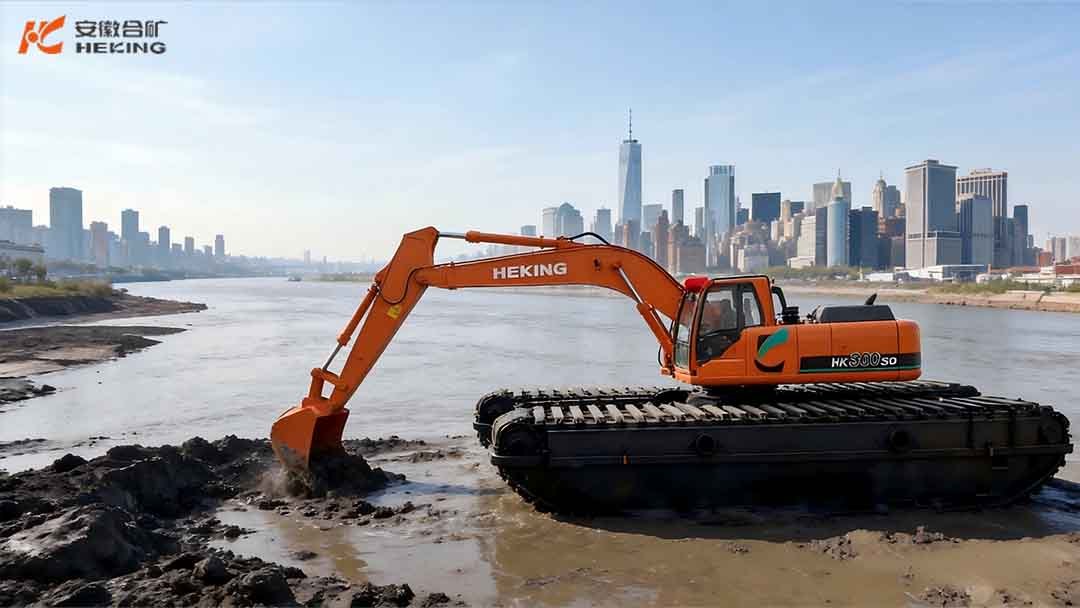
River dredging is an important part of waterway management, environmental protection, and infrastructure maintenance projects. It involves removing sediment, improving water flow, maintaining channels, and restoring river environments.
Traditional excavation equipment often faces difficulties when working in rivers, wetlands, and soft ground areas due to unstable surfaces and limited accessibility. Projects require specialized machinery that can maintain stability while performing excavation operations in challenging conditions.
HEKING amphibious excavators are designed for river dredging applications where conventional excavators may have operational limitations. By combining excavator capabilities with amphibious pontoon systems, these machines are suitable for projects involving shallow water, muddy areas, wetlands, and waterway construction environments.
For contractors, engineering companies, and project owners, selecting suitable river dredging equipment is essential for improving project efficiency and reducing operational challenges in complex working environments.
Industry Background and Challenges
River dredging projects are commonly used in waterway maintenance, flood control, environmental restoration, and infrastructure development. These projects often require equipment that can operate in locations with limited access and unstable ground conditions.
Soft Ground and Unstable Terrain Challenges
Many river areas contain mud, sediment layers, wetlands, and saturated soil conditions. Standard construction machinery may experience reduced mobility or difficulty maintaining stable operation in these environments.
Dredging equipment used for these applications needs to provide improved ground adaptability and stable working performance when operating on soft surfaces.
Water-Based Working Conditions
River dredging operations frequently involve shallow water areas where equipment must work close to or partially within water environments.
The equipment needs to support excavation activities while maintaining operational stability during waterway projects.
Access and Reach Requirements
Some river projects require excavation work beyond the normal working range of standard machines. Long-reach configurations can help operators access areas that are difficult to reach from conventional positions.
For contractors, equipment flexibility and application suitability are important factors when selecting dredging solutions.
Recommended Product Solution
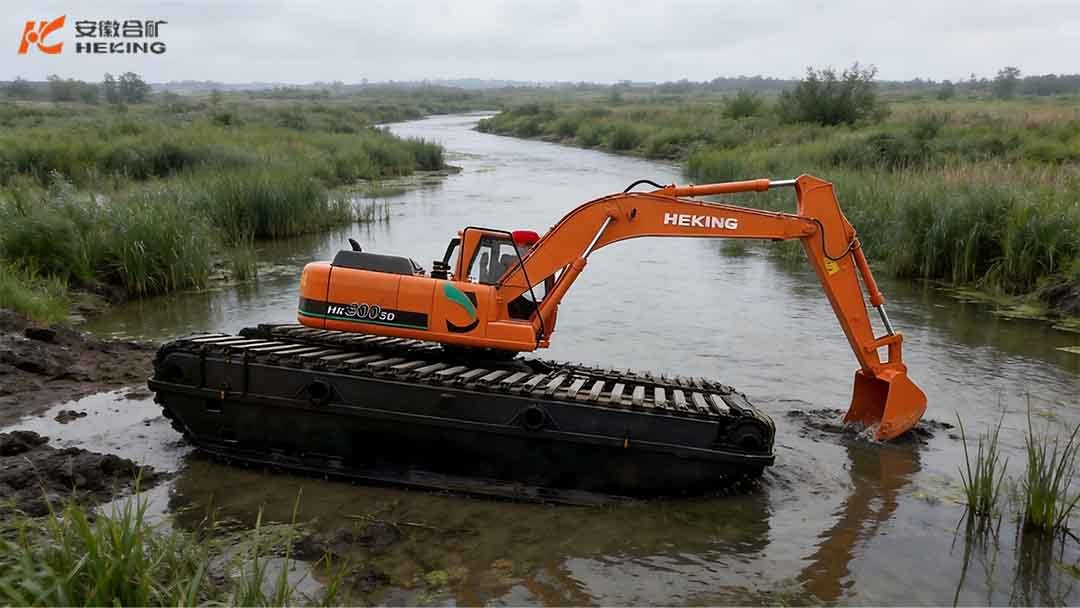
For river dredging applications, HEKING provides amphibious excavator solutions designed for wetland and water-related engineering projects.
The main recommended products include amphibious excavators and amphibious pontoon systems.
Amphibious Excavator Solution
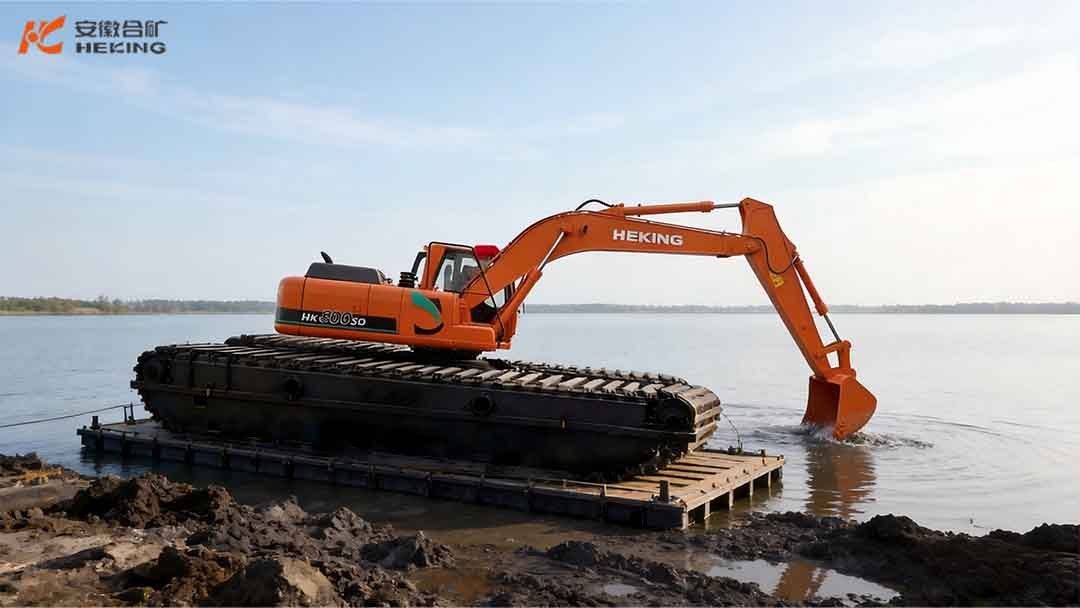
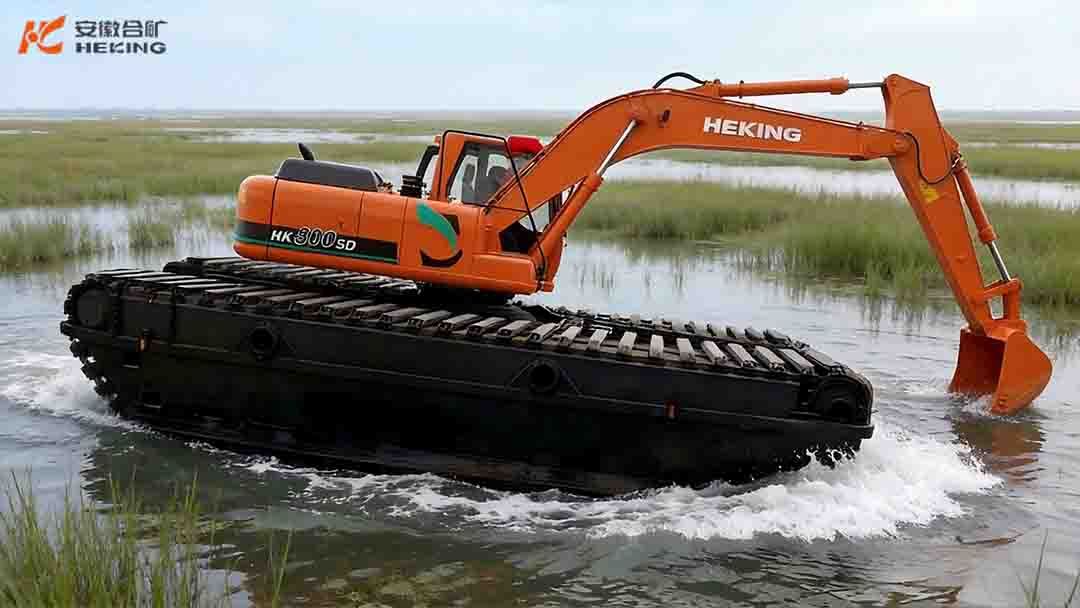
Amphibious excavators combine excavator functions with amphibious undercarriage systems. The pontoon structure helps improve machine stability when working in soft ground, wetlands, and shallow water environments.
These machines are suitable for:
River dredging projects
Waterway maintenance
Environmental restoration operations
Long Reach Amphibious Excavator Solution
Long reach amphibious excavators are suitable for projects requiring extended working distance. They can support excavation operations in areas where access limitations require additional working range.
Applications include river maintenance, sediment excavation, and water environment improvement projects.
Amphibious Pontoon System
Amphibious pontoons provide an undercarriage solution for excavators operating in soft and unstable environments.
They are suitable for customers who require amphibious conversion solutions for excavators used in wetland and shallow water applications.
How the Solution Works
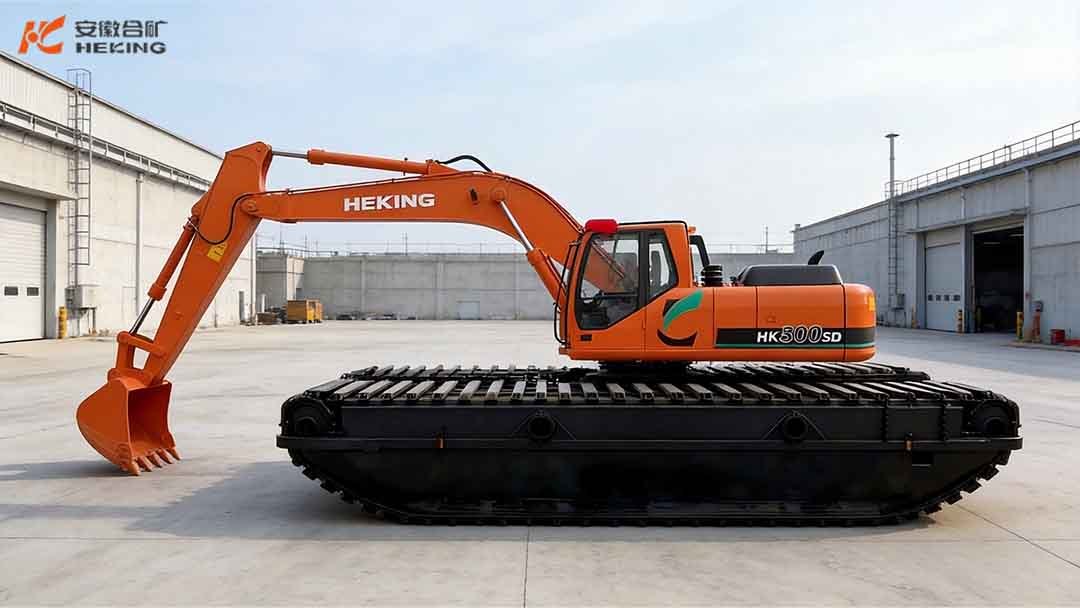
HEKING amphibious excavators operate by integrating an excavator upper structure with an amphibious undercarriage system.
The amphibious pontoon system replaces conventional crawler undercarriage limitations by providing improved support in soft terrain and water-related environments.
Working Principle
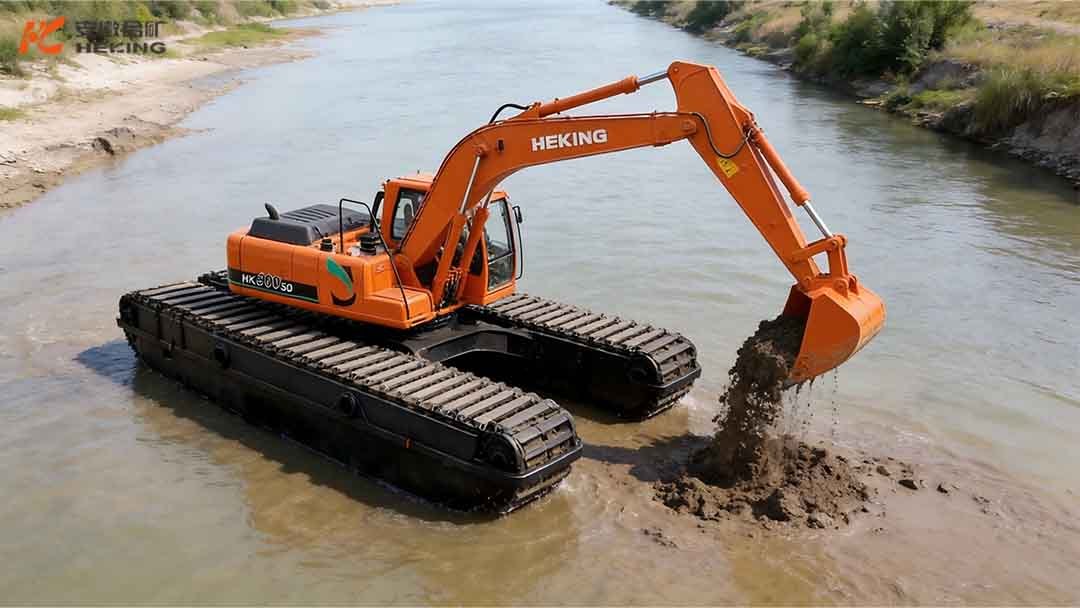
During river dredging operations, the amphibious excavator uses its hydraulic excavation system to remove sediment, soil, and other materials from waterways.
The amphibious undercarriage provides support when the machine operates on muddy ground, wetlands, or shallow water areas.
Main Components
The main solution components include:
Excavator working system
Amphibious pontoon undercarriage
Hydraulic operating system
Optional long-reach configuration
Customized engineering components based on project requirements
Operation Process
A typical river dredging operation includes:
Equipment transportation and installation
Working position adjustment
Excavation and sediment removal
Material handling
Site movement and continued operation
Application Scenarios
River Channel Maintenance Dredging
Industry:
Waterway Engineering
Project Type:
River maintenance and sediment removal projects
Application:
Amphibious excavators are used for removing accumulated sediment, maintaining river channels, and supporting water flow improvement activities.
Working Environment:
Shallow water areas, muddy riverbanks, soft soil zones, and unstable terrain conditions.
Buyer Type:
Government projects, water engineering contractors, environmental companies, and infrastructure operators.
Wetland Environmental Restoration
Industry:
Environmental Engineering
Project Type:
Wetland restoration and ecological improvement projects
Application:
Amphibious dredging equipment is applied for excavation, soil movement, and environmental improvement work in wetland areas where conventional machinery has limited mobility.
Working Environment:
Marshes, wetlands, saturated soil, and low-bearing-capacity ground.
Buyer Type:
Environmental contractors, restoration project companies, and government environmental programs.
Flood Control and Water Management Projects
Industry:
Water Conservancy and Infrastructure
Project Type:
Flood prevention and river management projects
Application:
River dredging equipment supports excavation and maintenance activities required for improving waterway conditions and supporting flood control operations.
Working Environment:
Rivers, channels, reservoirs, and areas affected by sediment accumulation.
Buyer Type:
Engineering contractors, government organizations, and water management companies.
Canal and Waterway Construction
Industry:
Civil Engineering
Project Type:
Canal construction and waterway improvement projects
Application:
Amphibious excavators are suitable for excavation and maintenance operations in areas where water access and soft ground conditions create challenges for conventional equipment.
Working Environment:
Canals, shallow water zones, and soft foundation areas.
Buyer Type:
Construction companies, engineering contractors, and project developers.
Oil and Gas Pipeline Related River Crossing Projects
Industry:
Energy Infrastructure
Project Type:
Pipeline construction support projects
Application:
Amphibious excavation equipment can support excavation activities in wetland and water-related pipeline construction environments.
Working Environment:
Wetlands, marsh areas, river crossing locations, and soft ground construction sites.
Buyer Type:
Pipeline contractors, engineering companies, and energy project suppliers.
Technical Requirements for This Application
River dredging projects require equipment selection based on working environment, project scale, and operational requirements.
Capacity Requirements
Equipment capacity should match project requirements, including excavation volume, sediment conditions, working depth, and project duration.
Different excavator classes can be selected according to application needs, including 15-ton, 20-ton, 30-ton, and 40-ton amphibious excavator solutions from HEKING.
Operating Conditions
River dredging equipment should be suitable for:
Soft ground conditions
Muddy terrain
Shallow water operations
Wetland environments
Limited-access project areas
Environmental Factors
Project conditions should be evaluated before selecting equipment, including:
Water depth
Ground bearing conditions
Sediment characteristics
Working space
Transportation requirements
Technical Specifications
Important factors for buyers include:
Excavator operating capacity
Working reach requirements
Amphibious pontoon configuration
Equipment compatibility
Custom engineering requirements
Installation Requirements
Before operation, contractors should consider:
Transportation method
Site preparation
Equipment assembly requirements
Working area conditions
Maintenance Considerations
Regular inspection and maintenance should focus on:
Hydraulic systems
Excavator working components
Amphibious undercarriage systems
Structural components
Product Advantages for This Application
Designed for river dredging projects requiring operation in soft ground and shallow water environments.
Suitable for waterway maintenance applications where conventional excavators may have limited accessibility.
Amphibious pontoon systems help improve equipment stability on unstable terrain.
Available with different excavator classes to support various project requirements.
Long reach configurations can support excavation operations requiring extended working distance.
Manufactured for wetland, dredging, and environmental engineering applications.
Customized solutions are available based on customer working conditions and project requirements.
Export-oriented manufacturing supports international project supply requirements.
Professional engineering support helps customers select suitable equipment configurations.
Product Selection Guide
Selecting suitable river dredging equipment requires evaluation of several project factors.
Project Requirements
Buyers should identify:
Required excavation tasks
Project working environment
Expected operating conditions
Equipment transportation requirements
Working Environment
Different environments require different solutions.
For soft ground and wetland areas, amphibious excavators with pontoon systems can provide improved adaptability compared with standard excavators.
Equipment Capacity
Equipment selection should consider:
Excavator class
Working range
Project scale
Material handling requirements
Technical Specifications
Important technical considerations include:
Machine configuration
Reach requirements
Pontoon design
Optional accessories
Supplier Capability
When choosing a supplier, buyers should evaluate:
Manufacturing experience
Engineering capability
Export experience
Technical communication ability
After-Sales Support
International buyers should consider:
Spare parts support
Technical assistance
Long-term supplier cooperation
Customization and Engineering Support
HEKING provides OEM and ODM services for customers requiring customized amphibious equipment solutions.
The engineering team can develop solutions according to specific project requirements, including:
Long-reach excavator configurations
Extendable amphibious chassis
Additional side pontoons
Spud pile systems for operations in water depths up to 3 meters
Customized engineering support allows contractors and project owners to select equipment configurations according to actual working environments and operational requirements.
Manufacturing and Supply Capability
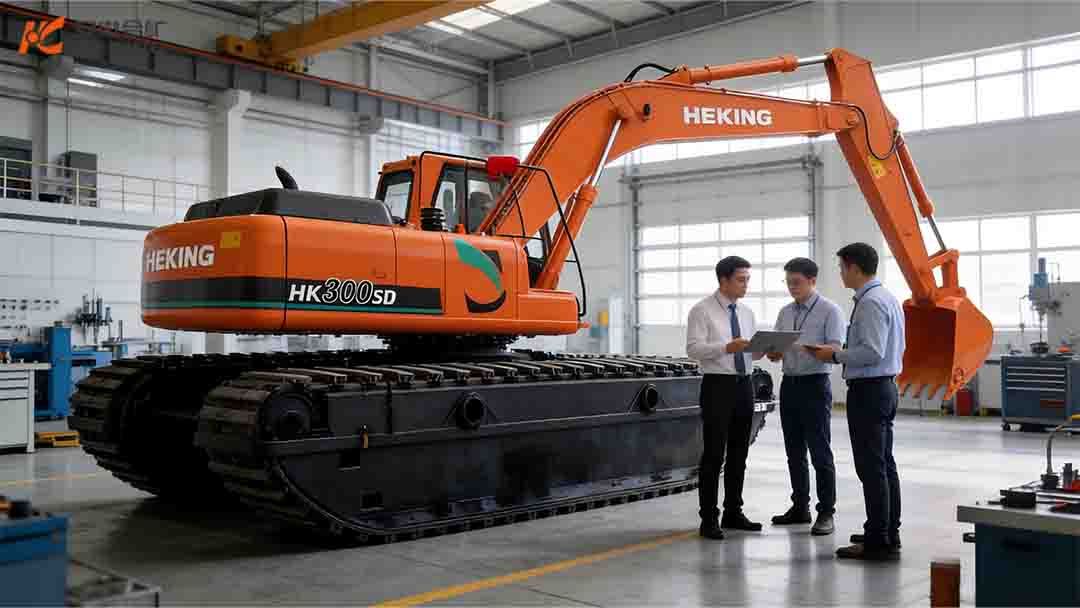
Anhui Hekuang Environmental Technology Co., Ltd. is a professional manufacturer specializing in amphibious equipment and construction machinery for wetland, water, and environmental engineering projects.
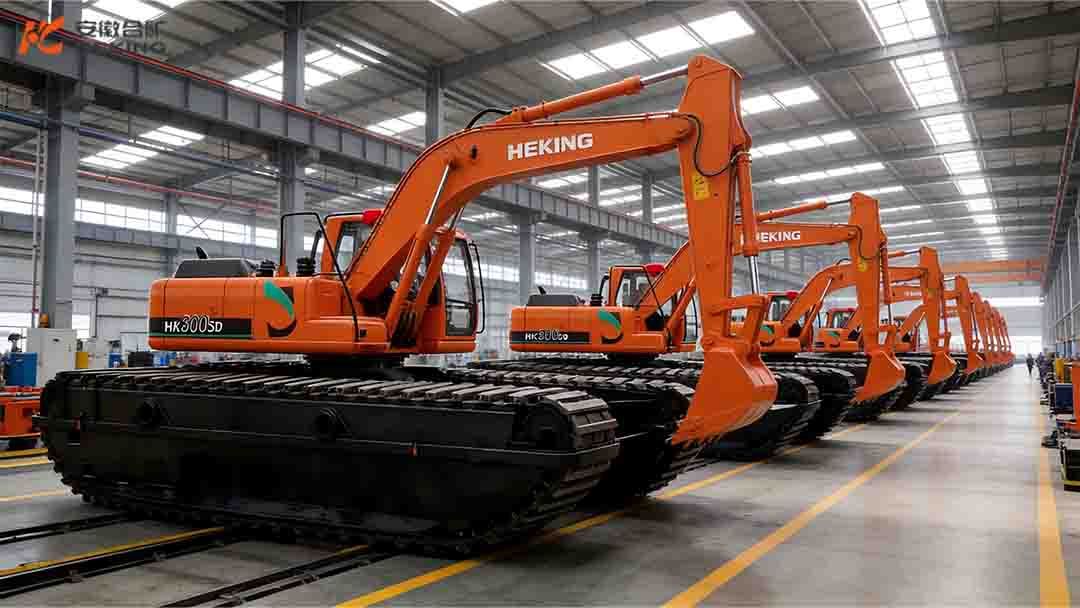
The company operates a production base covering more than 100,000 square meters and has a team of 125 employees, including 42 technical specialists and 10 senior professional engineers.
HEKING integrates:
Product research
Engineering design
Manufacturing
International trade
The company provides amphibious excavators, amphibious pontoon systems, crawler excavators, material handling excavators, and amphibious carriers for global customers.
With export experience covering Western Europe, Eastern Europe, Southeast Asia, Eastern Asia, Oceania, and Africa, HEKING supports international distributors, contractors, and project owners with stable production capability and professional service.
Related Products
Long Reach Amphibious Excavator
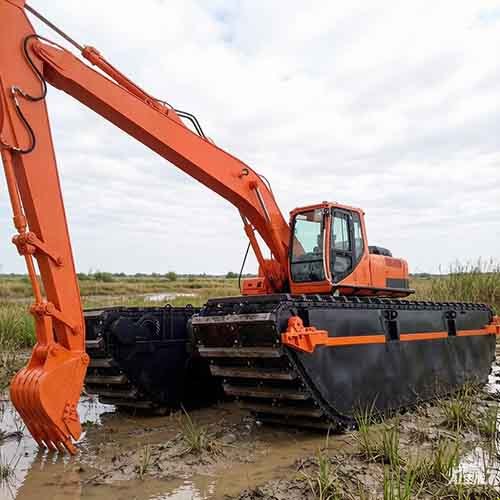
Application Role:
Used for river dredging projects requiring extended excavation distance and improved access to difficult working areas.
Reason:
Long reach configurations help support excavation operations where standard working ranges may not meet project requirements.
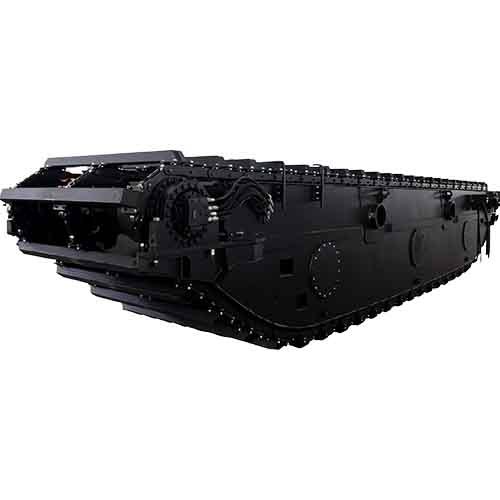
Application Role:
Provides an amphibious undercarriage solution for excavators operating in soft ground, wetlands, and shallow water environments.
Reason:
Amphibious pontoons improve equipment adaptability for challenging terrain conditions and water-related construction applications.
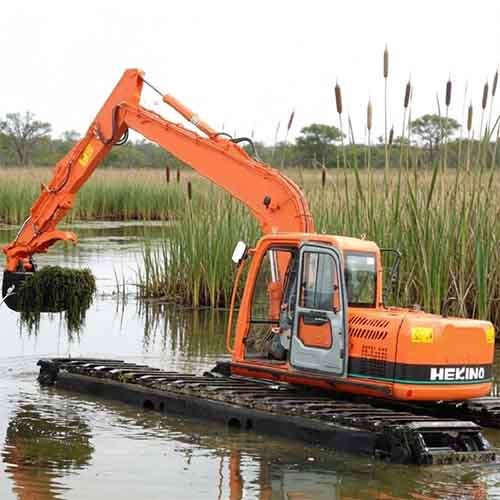
Application Role:
Designed for river dredging, wetland construction, environmental restoration, and waterway maintenance projects.
Reason:
Combines excavator working functions with amphibious mobility for complex ground conditions.
FAQ
Q1: What equipment is suitable for river dredging projects?
Answer:
River dredging projects commonly require equipment that can operate in water-related and unstable environments. Amphibious excavators are suitable for river dredging because they are designed for soft ground, wetlands, muddy areas, and shallow water operations.
Q2: Can an amphibious excavator be used for sediment removal?
Answer:
Yes. Amphibious excavators can be used for sediment removal operations in rivers, waterways, wetlands, and environmental restoration projects. Their excavation system supports material removal in challenging working conditions.
Q3: What is the difference between a dredging excavator and a standard excavator?
Answer:
A dredging excavator is designed for specific working environments such as rivers, wetlands, and soft terrain. Amphibious excavators use pontoon-based undercarriage systems to improve stability and mobility in areas where standard excavators may have limitations.
Q4: Why are amphibious pontoons used in river dredging?
Answer:
Amphibious pontoons provide additional support for excavators operating on soft ground and shallow water areas. They help equipment adapt to unstable environments during river dredging operations.
Q5: What industries use river dredging equipment?
Answer:
River dredging equipment is commonly used in waterway engineering, environmental restoration, flood control projects, canal maintenance, and infrastructure construction applications.
Q6: How do I choose the right amphibious excavator for river dredging?
Answer:
Equipment selection should consider project conditions, excavation requirements, working environment, machine capacity, reach requirements, and supplier engineering capability.
Q7: Can HEKING provide customized dredging excavator solutions?
Answer:
Yes. HEKING provides OEM and ODM services and can develop customized solutions including long-reach configurations, extendable amphibious chassis, additional side pontoons, and spud pile systems based on project requirements.
Q8: What working environments are suitable for amphibious excavators?
Answer:
Amphibious excavators are suitable for wetlands, swamps, shallow water areas, muddy terrain, dredging sites, and environmental engineering projects.
Q9: Does HEKING export amphibious excavators internationally?
Answer:
Yes. HEKING supplies amphibious equipment to international markets including Western Europe, Eastern Europe, Southeast Asia, Eastern Asia, Oceania, and Africa.
Q10: How can I request a river dredging equipment quotation?
Answer:
Buyers can contact HEKING with project information, working environment details, and equipment requirements. The engineering team can provide technical consultation and suitable solution recommendations.
Contact Us
Looking for reliable river dredging equipment for your next project?
HEKING provides amphibious excavator solutions designed for river maintenance, wetland construction, dredging operations, and environmental engineering applications.
Our team can support:
Equipment quotation requests
Technical consultation
Project condition evaluation
Equipment configuration recommendations
Long-term supplier cooperation
Contact HEKING to discuss your river dredging project requirements and receive a suitable equipment solution from an experienced amphibious machinery manufacturer.