
Environmental restoration projects are frequently carried out in areas where normal construction access is difficult. Wetlands, swamps, marshes, shallow-water zones, dredging areas, and environmental restoration sites can combine soft ground, standing water, restricted access, and changing site conditions.
These conditions can make equipment selection an important part of project planning. An excavator intended for environmental restoration may need to operate in locations where conventional crawler equipment has limited access or where the project requires a different approach to ground and water conditions.
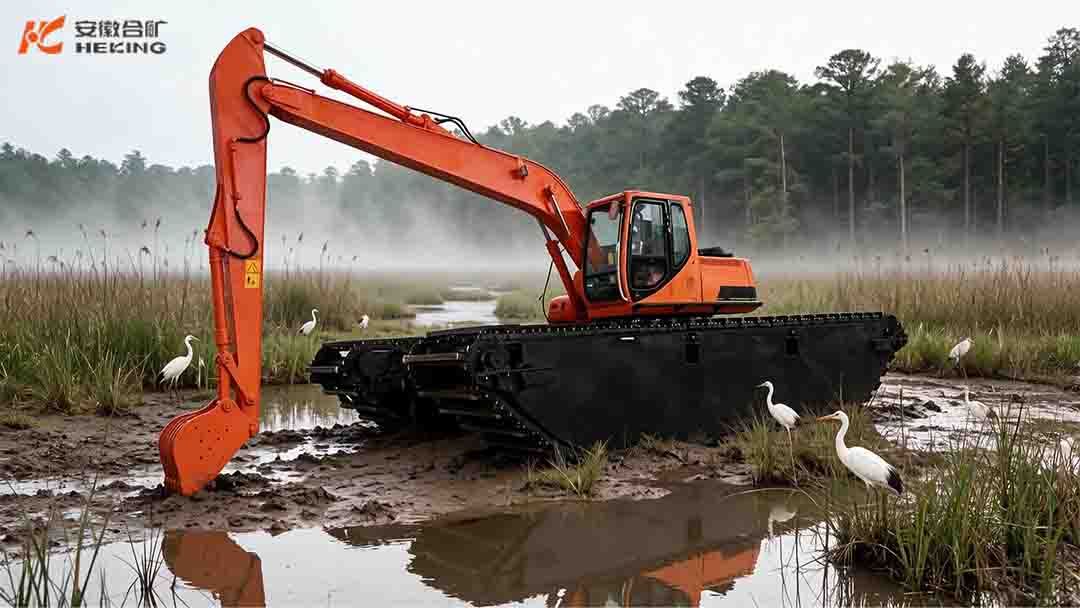
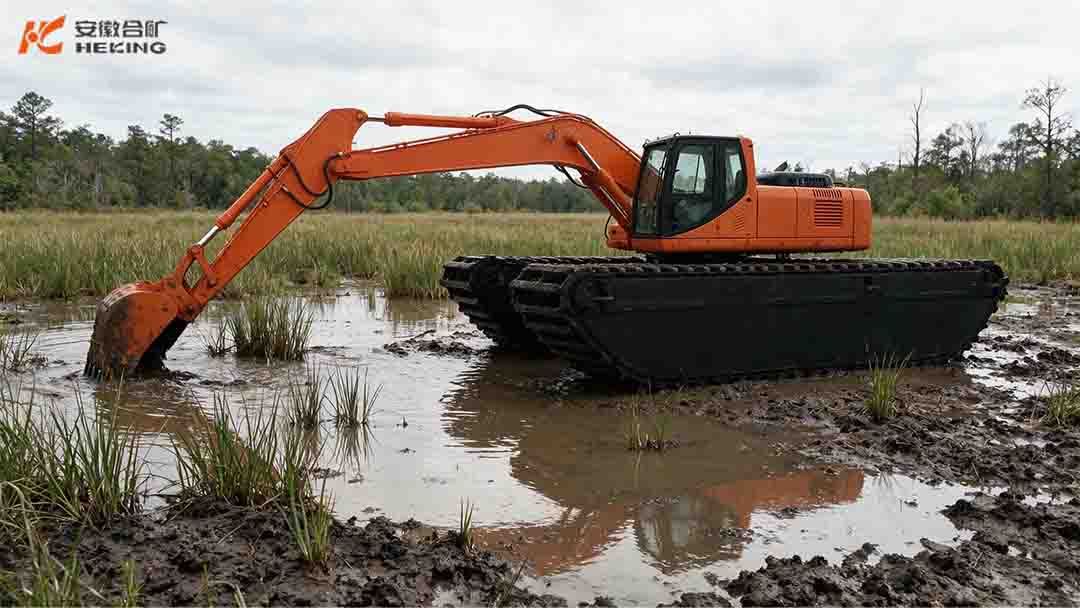
Amphibious excavators are designed for applications involving difficult wetland and shallow-water environments. For environmental restoration contractors, they can be considered for projects requiring excavation and other construction activities in wetlands, water-adjacent areas, and environmental engineering sites.
The appropriate equipment depends on the actual site conditions, project scope, access requirements, required reach, operating depth, and other engineering considerations. Therefore, environmental restoration equipment should be selected according to the working environment rather than simply by machine size.
For international contractors, engineering companies, distributors, and project owners, this application page provides a practical framework for evaluating amphibious excavators for environmental restoration work.
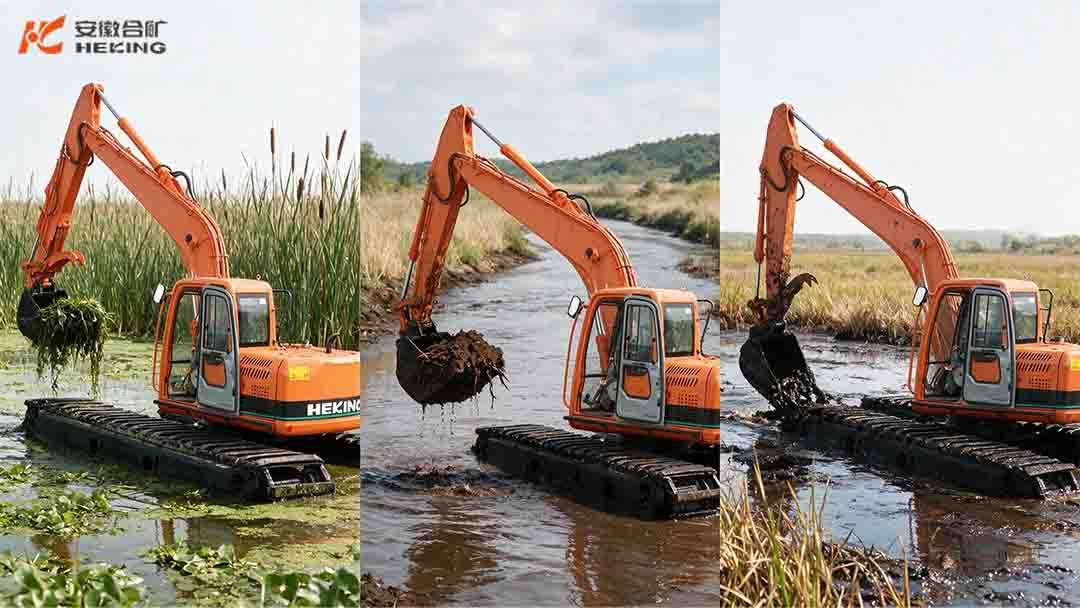
Application Scope
Environmental restoration is a broad field, so equipment selection should remain connected to the actual project environment and work requirements.
Amphibious equipment may be considered for restoration projects involving:
Wetlands and marshes
Swamp areas
Shallow-water environments
Water-adjacent restoration sites
Dredging areas
Environmental engineering projects
Difficult-access restoration sites
Projects requiring equipment to work across wet and soft terrain
The specific work performed by the equipment depends on the project design, machine configuration, attachments, access conditions, and operating requirements.
HEKING's amphibious equipment portfolio includes amphibious excavators, amphibious undercarriage pontoon systems, crawler excavators, material handling excavators, and amphibious carriers. The amphibious excavator range is particularly relevant when a restoration project requires excavator-based construction work in challenging wetland or water environments.
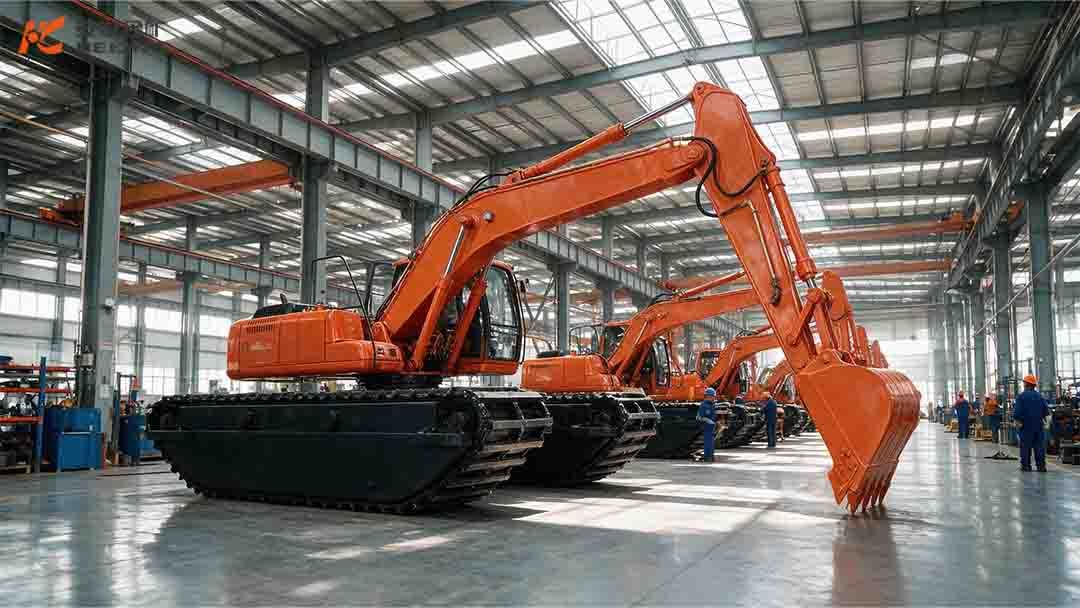
Industry Background and Operating Environment
Environmental restoration projects can involve the rehabilitation, modification, maintenance, or improvement of environmentally sensitive areas. Depending on the project, contractors may need to work around water, wetlands, soft ground, vegetation, sediment, or restricted-access zones.
From an equipment-selection perspective, these environments create a different operating context from conventional dry-land construction.
Wetland and shallow-water projects may involve:
Soft or Waterlogged Ground
Ground conditions can be substantially different from those found on conventional construction sites. Equipment selection therefore needs to consider how the machine will access and operate within the project area.
Shallow-Water Work Areas
Some environmental projects extend into shallow water or water-adjacent zones. Amphibious equipment can be considered where the project requires machinery specifically intended for wetland and water environments.
Restricted Access
Restoration sites may have limited access routes or difficult terrain. The equipment configuration should be evaluated against the available working area and the intended construction activities.
Changing Site Conditions
Environmental restoration areas can contain combinations of soft ground, water, sediment, and other challenging conditions. Contractors should evaluate actual site conditions before determining the appropriate equipment configuration.
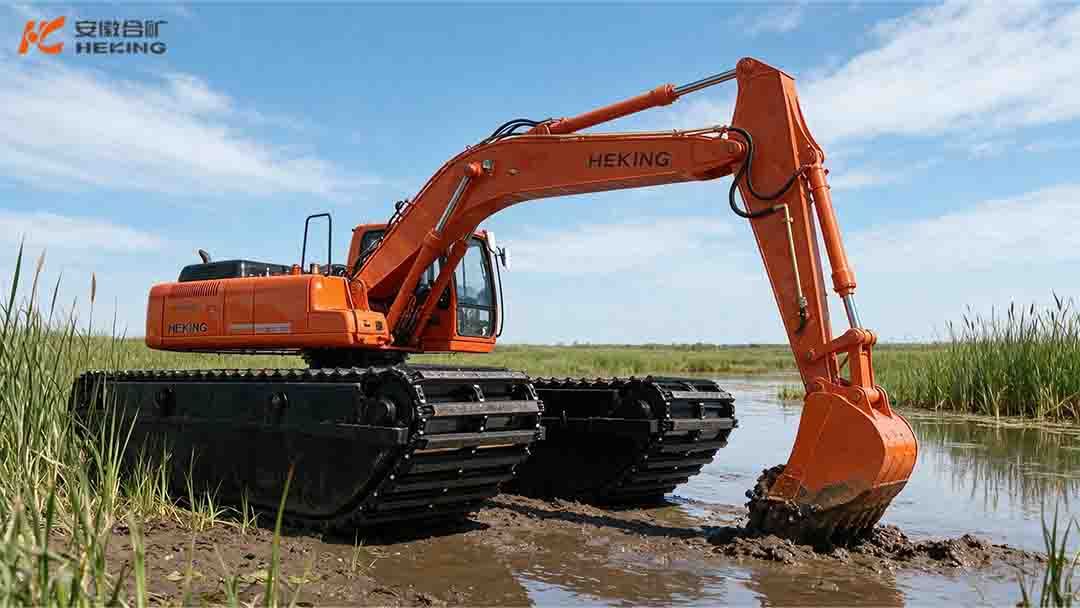
Application Challenges
Environmental restoration contractors may face several equipment-related challenges when working in wetlands and water environments.
Difficult Ground Conditions
Soft, saturated, or waterlogged terrain can make equipment access more difficult than on conventional construction sites. Equipment must therefore be selected with the actual ground conditions in mind.
Water and Wetland Access
A restoration project may require machinery to work near or within shallow water. Conventional equipment may not always provide the operating configuration required for such environments.
Limited Working Space
Environmental projects can involve restricted work areas. The selected machine should be evaluated according to the available access, required working range, and project layout.
Reach Requirements
Some restoration activities may require equipment to reach areas that are difficult to approach directly. Long-reach configurations can be considered where the project requirements support them.
Equipment Stability and Site Conditions
Projects involving water and soft ground require careful consideration of equipment configuration and operating conditions. For specialized amphibious equipment, factors such as chassis configuration, pontoons, and optional support systems may need to be evaluated as part of the overall solution.
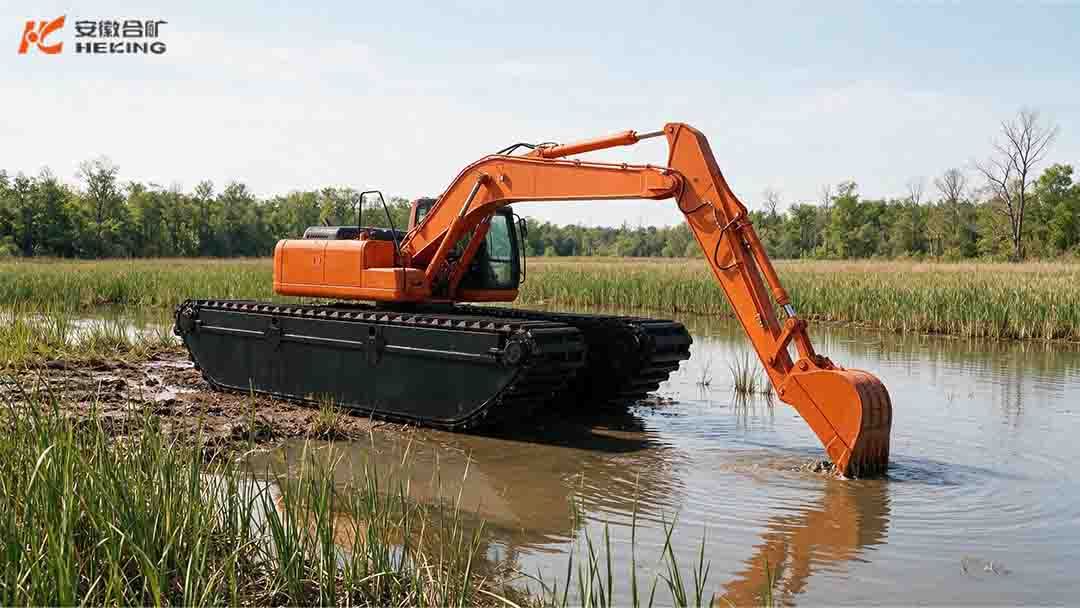
Technical Requirements for the Application
Environmental restoration equipment should be evaluated according to the actual project environment rather than using a single specification as the deciding factor.
Important considerations include:
Working Environment
The first consideration is where the equipment needs to operate. Buyers should identify whether the project involves wetland, swamp, shallow water, dredging areas, or a combination of these environments.
This information helps determine whether amphibious equipment is an appropriate solution to consider.
Equipment Configuration
An amphibious excavator may be configured differently depending on the working environment and project requirements. HEKING provides amphibious equipment solutions that can incorporate different configurations, including extendable amphibious chassis, additional side pontoons, and spud pile systems.
The appropriate configuration should be determined from actual site conditions and engineering requirements.
Required Reach
Where the working area cannot be accessed directly, reach may become an important selection factor. HEKING provides customized solutions that include long-reach excavator configurations where required by the project.
Water Depth
Water depth is another important project consideration. HEKING states that its engineering team can develop customized amphibious solutions for working conditions involving water depths of up to 3 meters.
This should be treated as a project-specific engineering consideration rather than a universal operating specification for every model.
Machine Class
The required machine class depends on the work to be performed, project scale, access conditions, and required equipment configuration. HEKING offers amphibious excavators in 15-ton, 20-ton, 30-ton, and 40-ton classes.
Buyers should select the machine class based on the actual application rather than selecting solely by nominal tonnage.
Customization Requirements
Environmental restoration projects may have site-specific requirements. Where standard equipment does not match the operating environment, OEM and ODM support can be considered.
Recommended Solution
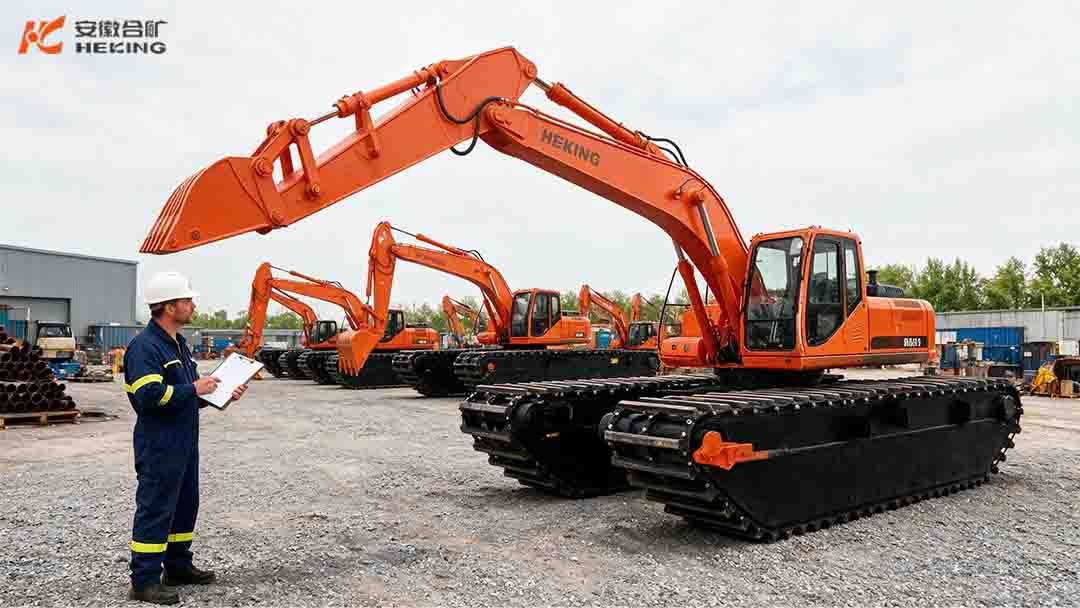
For environmental restoration projects involving wetlands, swamps, shallow water, or difficult-access environmental engineering sites, an amphibious excavator can be considered when the project requires excavator-based work in challenging wetland conditions.
The solution approach can be structured as:
Project Environment → Equipment Requirement → Amphibious Configuration → Project-Specific Selection
First, the contractor identifies the working environment and construction requirements. The equipment configuration can then be evaluated according to access conditions, operating environment, reach requirements, machine class, and other project-specific factors.
Where a standard configuration is not appropriate, HEKING can provide customized equipment solutions. Its engineering capabilities include long-reach excavators, extendable amphibious chassis, additional side pontoons, and spud pile systems for specific operating conditions.
This approach allows the equipment to be considered as part of the project solution rather than treating an excavator as a standalone product.
How the Solution Works
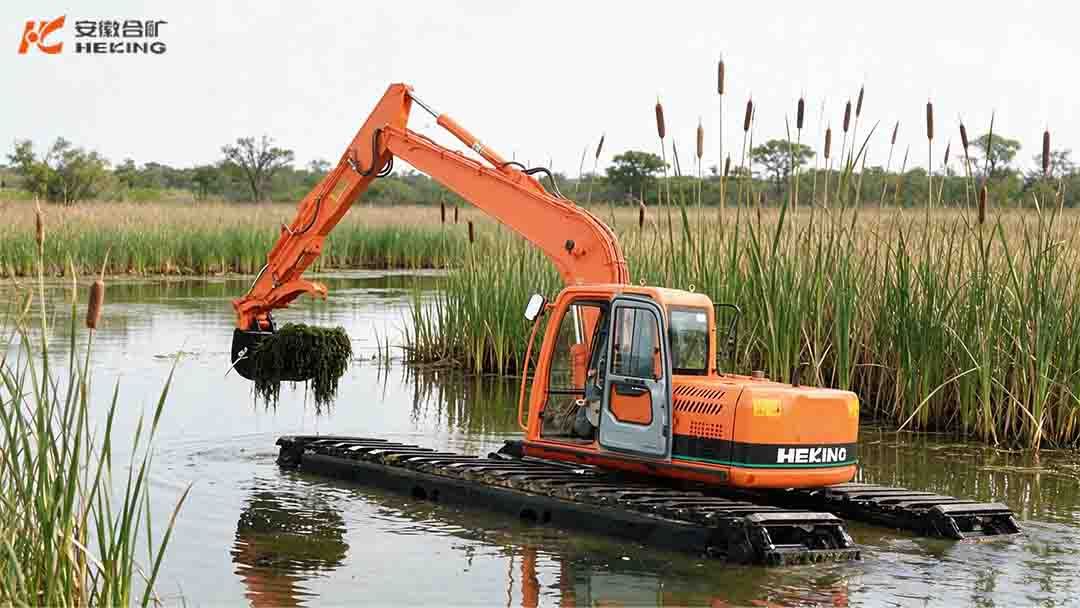
An amphibious excavator combines an excavator platform with an amphibious undercarriage configuration intended for difficult wetland and water environments.
The overall solution can include the base excavator and an amphibious support configuration selected according to project conditions.
Depending on the project, HEKING's customized solutions may incorporate:
Side pontoons
Extendable amphibious chassis
Long-reach excavator configurations
Spud pile systems
The actual configuration should be established according to the project's working environment and engineering requirements.
The purpose of this approach is to provide equipment suited to environments where conventional construction equipment may have access or operating limitations. The suitability of a particular configuration should always be assessed against the actual site conditions.
Application Scenarios
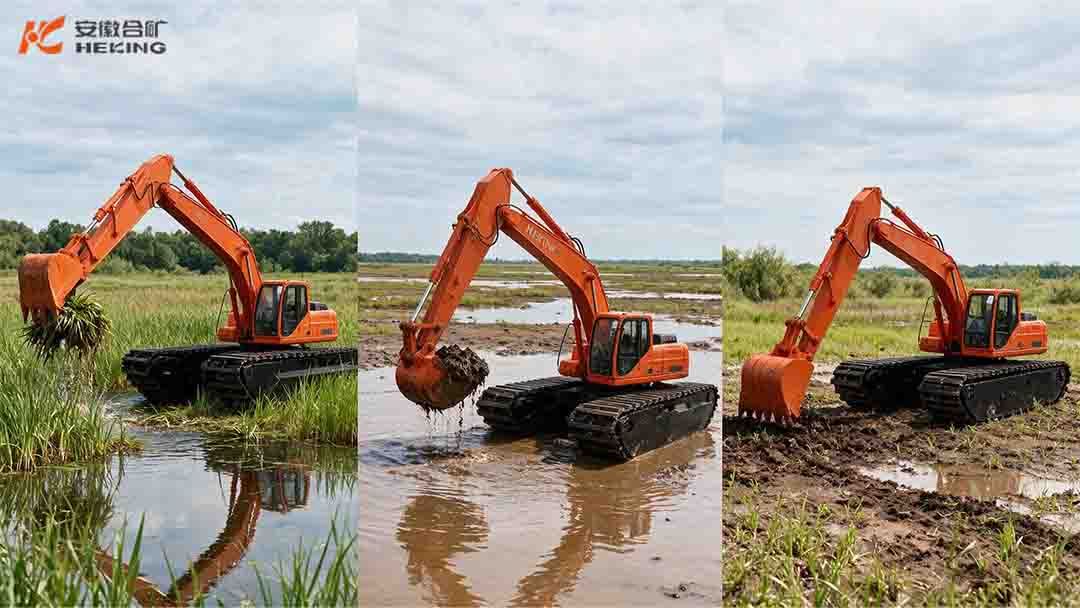
Wetland Restoration
Industry: Environmental engineering
Project Type: Wetland restoration
Application: Excavator-based restoration and construction activities in wetland environments
Operating Environment: Wetland and soft-ground conditions
Main Challenge: Accessing and working in difficult wetland terrain
Solution Requirement: Equipment configured for wetland and challenging ground conditions
Relevant Product or Solution: HEKING amphibious excavators
Buyer Type: Environmental contractors, engineering companies, project owners
Shallow-Water Environmental Projects
Industry: Environmental engineering
Project Type: Water-adjacent or shallow-water restoration
Application: Construction activities in shallow-water environments
Operating Environment: Shallow water and wetland areas
Main Challenge: Equipment access to water-adjacent working areas
Solution Requirement: Amphibious equipment appropriate for the project environment
Relevant Product or Solution: HEKING amphibious excavator solutions
Buyer Type: Contractors, EPC companies, project owners
Swamp and Marsh Restoration
Industry: Environmental restoration
Project Type: Swamp or marsh restoration
Application: Excavator-based environmental construction activities
Operating Environment: Swamp, marsh, and saturated ground
Main Challenge: Conventional equipment access in difficult terrain
Solution Requirement: Specialized amphibious machinery
Relevant Product or Solution: HEKING amphibious excavators
Buyer Type: Restoration contractors, environmental engineering companies, distributors
Dredging and Environmental Engineering Areas
Industry: Environmental engineering
Project Type: Dredging-related environmental project
Application: Excavator-based work in difficult-access areas
Operating Environment: Wetland, water, or dredging environment
Main Challenge: Operating equipment in challenging wet conditions
Solution Requirement: Equipment selected according to water, ground, access, and project requirements
Relevant Product or Solution: HEKING amphibious excavator solutions
Buyer Type: Dredging contractors, engineering companies, project owners
Relevant Products
HEKING HK150SD Amphibious Excavator
Product: HEKING HK150SD Amphibious Excavator
Application Role: Amphibious excavator option for environmental restoration projects requiring a smaller machine class.
Reason for Relevance: The HK150SD is part of HEKING's amphibious excavator range and can be evaluated for projects where its machine class and configuration match the site requirements.
Relevant Product Information: 15-ton class amphibious excavator with a stated reach of 9 m.
HEKING HK200SD Amphibious Excavator
Product: HEKING HK200SD Amphibious Excavator
Application Role: Amphibious excavator option for environmental restoration projects requiring a 20-ton class machine.
Reason for Relevance: The model is part of HEKING's amphibious excavator product range and can be considered when the project's equipment requirements align with its machine class and configuration.
Relevant Product Information: 20-ton class amphibious excavator with a stated reach of 10.8 m.
HEKING HK300SD Amphibious Excavator
Product: HEKING HK300SD Amphibious Excavator
Application Role: Amphibious excavator option for environmental restoration projects requiring a 30-ton class machine.
Reason for Relevance: The HK300SD provides an option within HEKING's larger amphibious excavator range for projects requiring a higher machine class.
Relevant Product Information: 30-ton class amphibious excavator with a stated reach of 10 m.
HEKING HK300SDA Amphibious Excavator
Product: HEKING HK300SDA Amphibious Excavator
Application Role: Long-reach amphibious excavator option for environmental restoration projects where additional working reach is relevant.
Reason for Relevance: The model is specifically identified as a long-reach amphibious excavator configuration.
Relevant Product Information: 35-ton long-reach amphibious excavator with a stated reach of 15.5 m.
HEKING HK400SD Amphibious Excavator
Product: HEKING HK400SD Amphibious Excavator
Application Role: Larger amphibious excavator option for environmental restoration and environmental engineering projects requiring a higher machine class.
Reason for Relevance: The HK400SD is part of HEKING's amphibious excavator range and can be evaluated against project scale and working requirements.
Relevant Product Information: 40-ton class amphibious excavator with stated reach information of 18.7 m / 12.049 m.
Product Selection Guide
Professional buyers should evaluate an amphibious excavator according to the complete project environment rather than choosing a machine based only on nominal tonnage.
1. Define the Working Environment
Identify whether the project involves wetlands, swamps, marshes, shallow water, dredging areas, or multiple operating environments.
2. Define the Required Work
Clarify what the excavator needs to accomplish and what type of construction or restoration activity is planned.
3. Evaluate Reach Requirements
If direct access to the work area is restricted, required reach should be considered during equipment selection. Long-reach configurations may be relevant to specific restoration projects.
4. Evaluate Machine Class
Compare the project requirements with the available machine classes. HEKING's amphibious excavator range covers 15-ton, 20-ton, 30-ton, and 40-ton classes.
5. Consider Water Conditions
If the equipment will operate in or near water, water depth and site conditions should be provided to the equipment supplier during technical evaluation.
HEKING's engineering team can develop customized solutions for specific conditions, including water depths of up to 3 meters.
6. Consider Customization
Where project requirements are unusual, buyers should determine whether the manufacturer can provide customized equipment.
HEKING provides OEM and ODM services and identifies long-reach excavators, extendable amphibious chassis, additional side pontoons, and spud pile systems as available customization directions.
7. Evaluate Supplier Support
For specialized environmental restoration machinery, technical communication before purchase is important. Buyers should provide project conditions, intended operating environment, required machine class, working reach, and other relevant requirements when requesting a quotation.
Application Benefits
When the project conditions are appropriate, amphibious equipment can provide several practical advantages for environmental restoration planning.
Application-Oriented Equipment Selection
Amphibious excavators are specifically associated with wetland, swamp, shallow-water, dredging, and environmental engineering environments, making them relevant to projects where operating conditions differ from conventional construction sites.
Multiple Machine Classes
HEKING offers amphibious excavators across 15-ton, 20-ton, 30-ton, and 40-ton classes, allowing buyers to evaluate different machine classes according to project requirements.
Custom Engineering Options
For projects with unusual access, reach, or water conditions, customized configurations can be considered. HEKING provides OEM and ODM services and can develop special-purpose solutions.
International Supply Capability
HEKING operates as an export-oriented manufacturer serving overseas markets including Western Europe, Eastern Europe, Southeast Asia, Eastern Asia, Oceania, and Africa.
For international buyers, this export orientation can be considered when evaluating long-term equipment supply and cooperation.
What Buyers Should Check When Selecting a Supplier
Environmental restoration equipment is application-specific, so supplier evaluation should cover more than the product name.
Buyers should check:
Relevant experience with amphibious and environmental engineering equipment
Available machine classes
Technical documentation
Equipment configuration options
Custom engineering capability
OEM and ODM availability
Production capability
Quality management
Export experience
Delivery capability
After-sales support
Ability to review project-specific working conditions
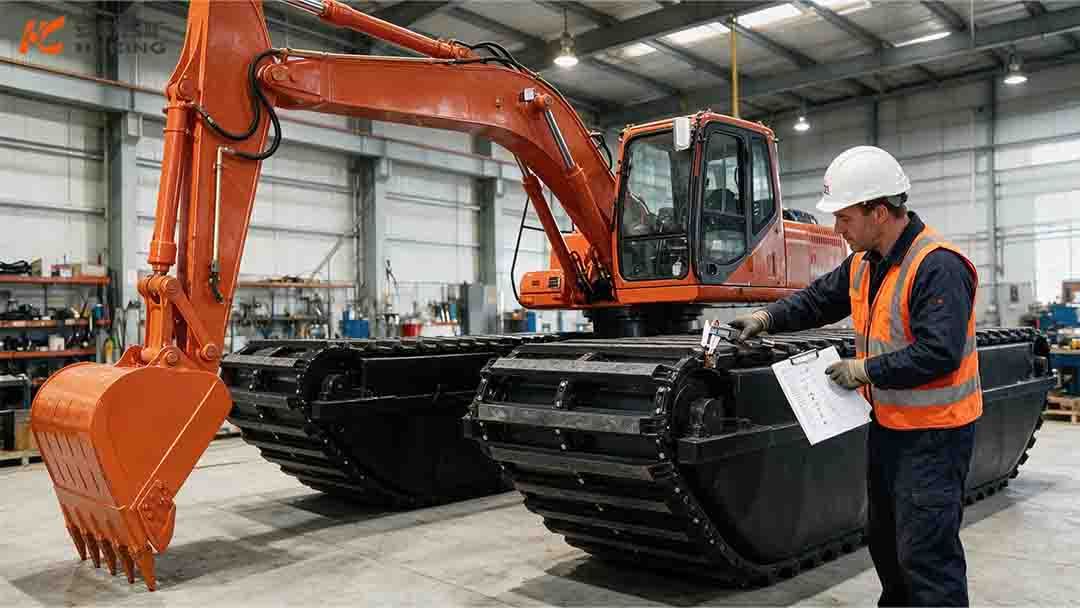
HEKING is a manufacturer specializing in amphibious equipment and construction machinery for wetland, water, and environmental engineering projects. The company operates a production base covering more than 100,000 square meters and has 125 employees, including 42 technical specialists and 10 senior professional engineers.
The company states that it provides CE, ISO9001, and ISO14001 certified products and maintains export markets across multiple regions. Buyers should request the relevant documentation for the specific equipment and project during procurement.
Manufacturing and Supply Capability
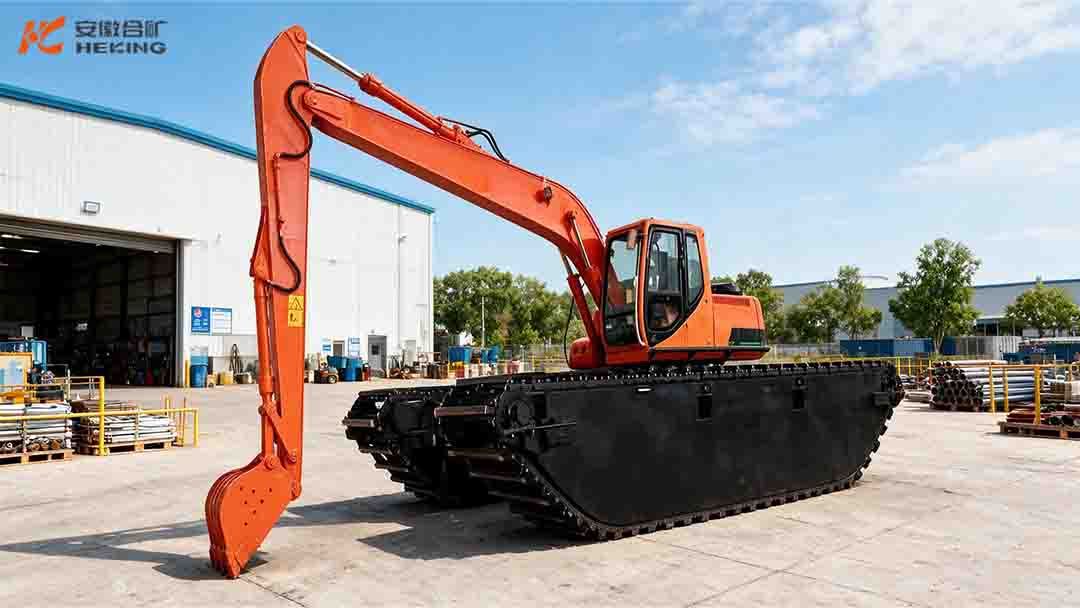
Anhui Hekuang Environmental Technology Co., Ltd. is a manufacturer based in Hefei, China, specializing in amphibious equipment and construction machinery for wetland, water, and environmental engineering applications.
The company operates a production base of more than 100,000 square meters and has a team of 125 employees, including 42 technical specialists and 10 senior professional engineers.
Its business scope covers amphibious excavators, amphibious undercarriage pontoon systems, crawler excavators, material handling excavators, and amphibious carriers.
For specialized projects, the company also provides OEM and ODM services. Its engineering team can develop customized solutions involving long-reach excavators, extendable amphibious chassis, additional side pontoons, and spud pile systems based on customer requirements.
FAQ
What is an amphibious excavator used for in environmental restoration?
An amphibious excavator can be considered for environmental restoration projects involving wetlands, swamps, shallow water, dredging areas, and other difficult-access environments where excavator-based construction work is required.
Which environmental restoration projects can use amphibious equipment?
Potential applications include wetland restoration, marsh and swamp restoration, shallow-water environmental projects, water-adjacent restoration, and certain environmental engineering or dredging-related projects. Actual suitability depends on the site and project requirements.
How do I choose an amphibious excavator for a restoration project?
Start by defining the working environment, required work, machine class, reach, access conditions, water conditions, and any customization requirements. The supplier can then evaluate the appropriate equipment configuration.
Does HEKING provide different amphibious excavator sizes?
Yes. HEKING provides amphibious excavators in 15-ton, 20-ton, 30-ton, and 40-ton classes. The appropriate model should be selected according to the project's actual requirements.
Can an amphibious excavator be customized for environmental projects?
HEKING provides OEM and ODM services and identifies customized options including long-reach excavators, extendable amphibious chassis, additional side pontoons, and spud pile systems.
Can HEKING develop solutions for deeper water conditions?
HEKING states that its engineering team can develop customized amphibious solutions for operations in water depths of up to 3 meters. Project-specific technical evaluation is required to determine the appropriate configuration.
What information should I provide when requesting an amphibious excavator quotation?
Buyers should provide the project location, working environment, water and ground conditions, required work, expected working area, reach requirements, preferred machine class if known, and any special configuration requirements.
Conclusion
Environmental restoration projects can present equipment-access challenges when work takes place in wetlands, swamps, shallow water, dredging areas, and other difficult environments. Equipment selection should therefore begin with the actual project conditions and required work rather than with a machine model alone.
Amphibious excavators can be considered for environmental restoration applications where specialized equipment is required for wetland and water environments. HEKING provides amphibious excavators in multiple machine classes and supports customized configurations for specific project requirements.
For buyers evaluating an environmental restoration equipment solution, the key considerations are the operating environment, machine class, reach, water conditions, equipment configuration, customization requirements, supplier engineering capability, and export support.
Contact Us
If you are planning an environmental restoration project involving wetlands, swamps, shallow water, dredging areas, or other difficult-access environments, contact HEKING to discuss the equipment requirements.
You can provide your project conditions, required work, working environment, expected water depth, reach requirements, and preferred equipment class. HEKING's engineering team can then review the application and discuss a suitable amphibious equipment configuration.
Request technical information, discuss project requirements, evaluate customized equipment options, or request a quotation for your environmental restoration project.